Sales Effectiveness

Nikita Jain
Introduction
Sales reps often perform well in training rooms but struggle in real customer conversations. The gap is rarely effort or intent—it is practice. Traditional sales training relies heavily on theory, scripts, and occasional role plays that are often artificial and inconsistent. Reps may understand what to say, but they rarely get enough realistic practice to handle objections, pressure, and unpredictable buyer behavior with confidence.
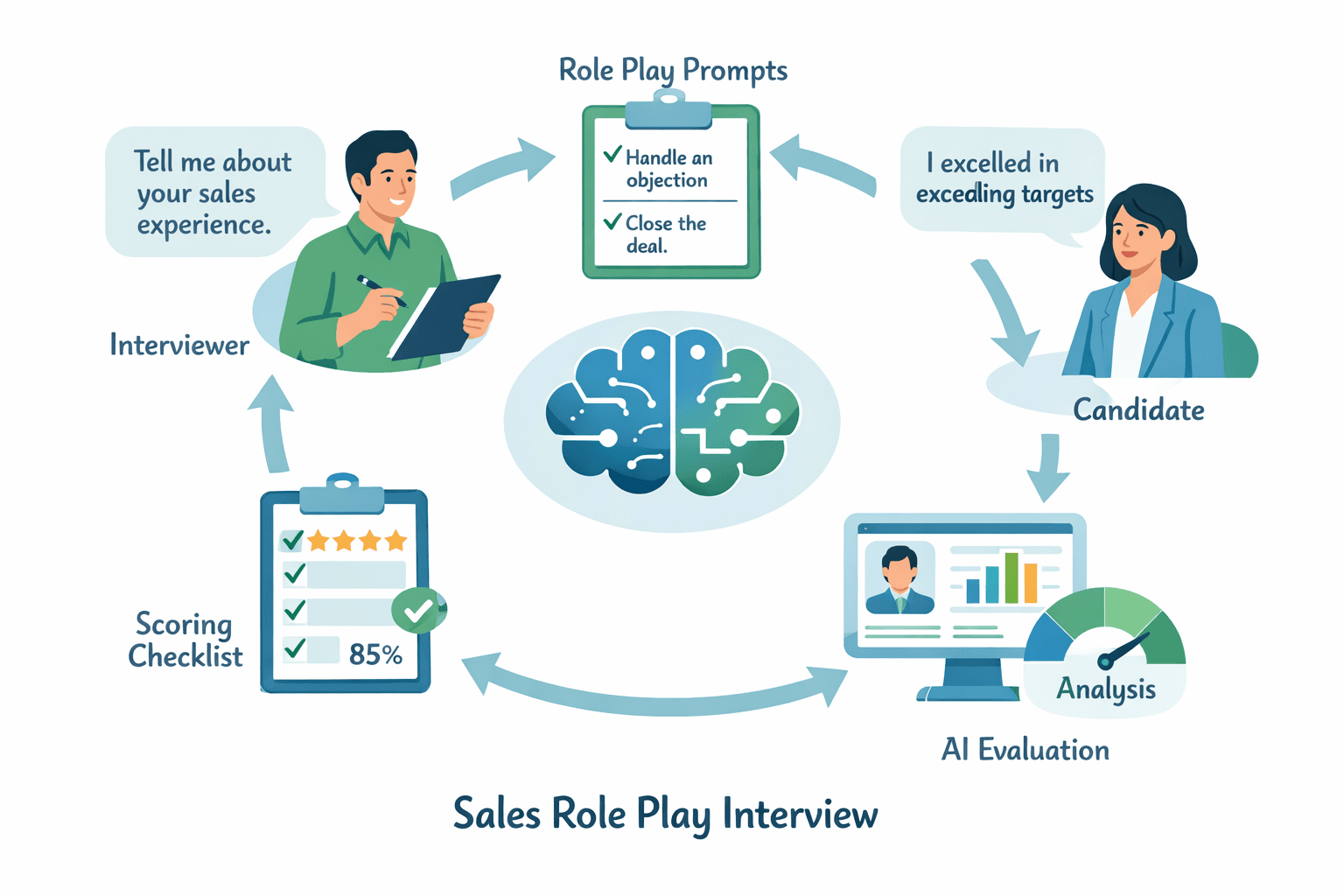
AI-powered sales role play changes this by making practice continuous, realistic, and scalable. Instead of waiting for a manager, trainer, or teammate, reps can practice real sales conversations anytime. AI-driven buyer simulations respond dynamically, push back on objections, and adapt based on the rep’s responses, creating scenarios that closely mirror real-world selling.
When used effectively, AI sales role play improves selling skills by turning learning into repeated, low-risk practice. Reps can experiment, make mistakes, and refine their approach without consequences. Over time, this repetition builds confidence, sharpens judgment, and develops the muscle memory needed for live customer conversations.
This approach is especially relevant today as sales cycles become longer and more complex, buyers arrive more informed, and managers have less time to coach every rep individually. Teams need practice environments that scale without slowing execution. AI sales role play addresses this challenge by combining realism, repetition, and immediate feedback in a way traditional training cannot.
Compared to traditional role plays, AI simulations offer greater consistency and frequency. Reps can practice the same skill multiple times, receive instant feedback, and track improvement over time. Skills such as discovery questioning, objection handling, value articulation, negotiation, and closing can be strengthened through targeted simulations aligned with real sales scenarios.
Importantly, AI role play does not replace the human element of selling. Instead, it complements manager coaching and peer feedback by preparing reps before real conversations and making live coaching more focused and impactful.
This blog explores AI sales role play in sales training, explaining how it works, where it delivers the most value, and why it is becoming a core component of modern sales enablement.
Why AI Sales Role Play Is Transforming Modern Sales Training
Sales training has always struggled with one fundamental problem: reps don’t get enough realistic practice. Classroom sessions, slide previews, and one-time role plays create awareness, but they rarely change behavior. AI sales role play addresses this gap by making practice continuous, scalable, and closely aligned with real selling situations.
One of the biggest advantages of AI sales role play is consistency. Traditional role plays depend on managers or peers, which means quality varies widely. Some reps get challenged, others don’t. AI creates a standardized practice environment where every rep faces comparable scenarios—discovery calls, objections, pricing pushback, and competitive conversations—without bias or fatigue.
Another major benefit is safe repetition. In live selling, mistakes are expensive. In AI role play, mistakes become learning moments. Reps can practice the same scenario multiple times, test different approaches, and refine their responses without risking pipeline or credibility.
AI role play also solves a long-standing time problem. Managers often want to coach but can’t role play with every rep regularly. AI fills this gap by providing on-demand practice and immediate feedback, freeing managers to focus on higher-impact coaching.
These benefits typically show up in clear patterns:
Reps practice more frequently without scheduling constraints
Confidence increases before real customer conversations
Objection handling becomes more structured and calm
Messaging improves across the team
Coaching conversations become more focused and skill-based
At this stage, sales leaders often raise important questions.
Is AI role play realistic enough to prepare reps for real buyers?
Modern AI simulations are designed around real buyer personas, industry language, and objection patterns. While not identical to humans, they are realistic enough to build muscle memory and decision-making skills.
Will reps take AI role play seriously?
Reps engage when scenarios reflect real deals they face. Adoption improves when AI role play is positioned as a practice tool—not a test—and tied to real performance goals.
Does AI replace managers or human coaching?
No. AI role play complements managers. It handles repetition and baseline feedback, allowing managers to focus on deeper coaching, deal strategy, and motivation.
Another key transformation is data-driven insight. Unlike traditional role plays, AI captures patterns across conversations—where reps struggle, which objections cause breakdowns, and how responses evolve over time. This insight helps sales leaders tailor training to actual gaps rather than assumptions.
AI role play also supports personalized learning. New hires can practice fundamentals, while experienced reps tackle advanced scenarios. This flexibility is difficult to achieve with group-based training alone.
Importantly, AI role play shifts training from event-based to habit-based learning. Short, frequent practice sessions fit naturally into busy sales schedules. Over time, this repetition leads to measurable behavior change.
Organizations that adopt AI sales role play see training move closer to real execution. Reps stop memorizing scripts and start developing judgment. Managers stop guessing skill gaps and start coaching with evidence.
As sales complexity continues to rise, teams that rely only on traditional training struggle to keep pace. AI sales role play offers a practical way to scale practice, improve confidence, and reinforce skills—without slowing down revenue motion.
Practical AI Sales Role Play Scenarios That Build Real Selling Skills
AI sales role play delivers the most value when it mirrors the exact situations reps face in live selling. Instead of abstract exercises, effective programs use structured, repeatable scenarios that build confidence, judgment, and adaptability over time. When reps practice frequently in realistic contexts, skills transfer naturally to customer conversations.
One of the most common and impactful scenarios is discovery call role play. Reps practice opening conversations, asking probing questions, and uncovering pain points. The AI buyer responds differently based on question quality, pushing reps to listen actively instead of following scripts. A frequent concern is whether discovery can really be practiced with AI; the answer lies in variability—when AI adapts responses, reps learn to think, not memorize.
Another high-impact scenario is objection handling role play. Reps face pricing pushback, budget constraints, timing delays, or competitor comparisons. The AI buyer escalates objections if responses are vague and de-escalates when value is clearly articulated. This helps reps understand that objections are not barriers, but signals for deeper clarification. Reps often wonder if repeating objection practice becomes redundant; in practice, repetition builds calm, structured responses under pressure.
Product demo and value articulation role play is another powerful use case. Reps practice explaining features in terms of outcomes, handling interruptions, and adjusting language to different buyer personas. When reps ask whether AI can judge clarity, feedback mechanisms—such as response relevance and buyer engagement—help highlight gaps in messaging.
As reps progress, negotiation and pricing conversations become critical scenarios. AI role play allows reps to test concessions, practice anchoring value, and respond to discount requests without undermining margins. Managers sometimes worry that AI encourages rigid responses; however, well-designed scenarios reward flexibility and rationale rather than fixed scripts.
These scenarios typically develop skills in a clear sequence:
Confidence in opening and controlling conversations
Depth and structure in discovery questioning
Calm, value-based objection handling
Clear articulation of differentiated value
Stronger negotiation discipline
AI role play also supports deal progression scenarios, where reps practice moving stalled deals forward. The AI buyer may go silent, introduce new stakeholders, or shift priorities. Reps learn to reframe value and re-engage strategically. A common question is whether these scenarios feel too complex; complexity is precisely what prepares reps for real-world unpredictability.
For new hires, onboarding role play scenarios focus on fundamentals—introductions, basic qualification, and product positioning. Experienced reps, on the other hand, benefit from advanced scenarios involving enterprise buyers, multi-threading, and competitive pressure. This adaptability ensures learning remains relevant across experience levels.
Effective AI role play programs also include post-scenario reflection. After each simulation, reps review feedback on clarity, structure, and missed opportunities. This reflection answers a key concern about whether AI feedback is actionable; when tied to specific moments, it accelerates improvement.
Organizations that implement these scenarios consistently see strong patterns:
Reps practice more often without manager scheduling
Skill gaps surface earlier and more clearly
Coaching conversations become more focused
Performance improves with less ramp time
Confidence carries into live calls
Over time, these practical AI sales role play scenarios change how reps learn. Training shifts from passive consumption to active practice. Reps stop fearing objections and start anticipating them. Managers stop guessing and start coaching with data.
When AI role play is aligned to real sales motions and reinforced regularly, it becomes a powerful engine for building durable selling skills at scale.
How Sales Teams Can Implement AI Sales Role Play Effectively
AI sales role play delivers results only when it’s implemented as part of a broader sales training and coaching strategy. Simply giving reps access to a tool doesn’t guarantee skill improvement. Adoption, relevance, and reinforcement determine whether AI role play becomes a performance driver or just another unused platform.
The first step is clarity of purpose. Sales teams need to position AI role play as a practice environment, not an evaluation system. When reps feel they’re being judged, engagement drops. When they see AI role play as a safe place to experiment and improve, usage increases naturally.
In the middle of implementation, sales leaders often ask critical questions.
How do we ensure reps actually use AI role play consistently?
Consistency comes from integration. When AI role play is embedded into onboarding, weekly routines, or coaching plans, it becomes part of how reps work—not an optional add-on.
Will AI role play replace human coaching and feedback?
AI handles repetition and baseline feedback, but human coaching adds context, motivation, and strategic insight. The strongest programs combine both.
How do we prevent AI practice from feeling disconnected from real deals?
Relevance matters. Scenarios must reflect actual buyer personas, objections, and sales stages that reps face daily.
Once these questions are addressed, teams can focus on execution. Effective implementation relies on structured habits rather than heavy mandates.
Key practices for successful AI sales role play adoption include:
Aligning role play scenarios with current sales motions and pipeline stages
Assigning short, frequent practice sessions instead of long, infrequent ones
Linking AI role play outcomes to coaching conversations and 1:1s
Using performance data to identify team-wide skill gaps
Encouraging reflection and iteration rather than one-time completion
Leadership support plays a major role. When managers actively reference AI role play in coaching discussions, reps take it seriously. When leaders ignore it, usage declines quickly.
Another important factor is progression. Reps should move from foundational scenarios to advanced ones as skills improve. Static content leads to stagnation. Dynamic progression keeps practice challenging and relevant.
Organizations also need to establish psychological safety around AI practice. Reps should know that mistakes in simulations are expected and valued as learning opportunities. This mindset shifts behavior from avoidance to engagement.
Measurement is essential, but it must be handled carefully. Instead of using AI scores as performance metrics, high-performing teams use them as diagnostic tools. Trends matter more than individual scores. Improvement over time matters more than perfection.
When AI role play is implemented thoughtfully, several changes emerge:
Reps practice more frequently without prompting
Objection handling becomes more consistent across the team
Confidence improves before live calls and demos
Managers coach with clearer insight into skill gaps
Training impact becomes more visible and measurable
AI sales role play is not a shortcut—it’s a multiplier. It amplifies the effectiveness of existing training and coaching efforts. Teams that treat it as part of a learning system, rather than a standalone solution, see lasting performance improvement.
As sales environments grow more complex, scalable practice becomes non-negotiable. AI sales role play offers a practical way to build skills, confidence, and consistency—without slowing down revenue execution.
Conclusion
AI sales role play bridges the long-standing gap between knowing and doing in sales training. By giving reps a safe, realistic, and repeatable way to practice real conversations, it turns learning into performance. Instead of relying only on theory, scripts, or occasional role plays, sales teams can build confidence, consistency, and skill through daily practice. When combined with human coaching, AI sales role play scales what great managers do best—help reps think better, respond faster, and sell with clarity. For modern sales teams, it’s no longer a nice-to-have, but a competitive advantage.
FAQs
What is AI sales role play?
AI sales role play uses artificial intelligence to simulate real buyer conversations for sales practice.
How does AI role play improve sales performance?
It enables repeated, realistic practice that builds confidence and execution skills.
Is AI sales role play better than traditional role play?
It complements traditional role play by offering consistent, on-demand practice.
What sales skills can AI role play improve?
Discovery, objection handling, value articulation, negotiation, and deal progression.
Do reps need manager involvement with AI role play?
Yes, manager coaching enhances insights gained from AI practice.
Is AI role play suitable for new hires?
Absolutely—it accelerates ramp time and skill readiness.
Can experienced reps benefit from AI sales role play?
Yes, advanced scenarios help prevent skill stagnation.
How often should reps use AI role play?
Short, frequent sessions work best—2–3 times per week.
Does AI sales role play replace sales training programs?
No, it reinforces and applies what training teaches.
Why is AI role play important for scaling sales teams?
Because it provides consistent practice without increasing manager workload.
Learn more about


Try our AI Roleplay Bots for Free
Reduce Ramp-Up time by
47%
and double your sales productivity
Nikita Jain is a dynamic CEO and recognized leader passionate about harnessing technology and capability development to unlock the full potential of individuals and organizations. With over a decade of rich experience spanning enterprise learning, digital transformations, and strategic HR consulting at top firms like EY, PwC, and Korn Ferry, Nikita excels at driving significant, measurable success.