Sales Effectiveness

Nikita Jain

Introduction
For decades, sales organizations have understood a simple truth: The single greatest driver of team performance is the quality of coaching that happens between a manager and their reps. Yet despite its importance, meaningful 1:1 sales coaching remains one of the most underdeveloped, inconsistently executed practices inside most revenue teams.
The issue isn’t a lack of intent. Sales managers genuinely want to coach. They want to develop their people, strengthen conversations, and elevate execution. But they are limited by the harsh realities of their day-to-day environment. Most managers spend their weeks jumping between forecast reviews, internal meetings, customer escalations, hiring needs, and operational firefighting. By the time they finally sit down for a 1:1, they are often relying on fragmented data — a rep’s recollection of a call, a skimmed CRM entry, or whatever recordings they’ve managed to manually review. This challenge is especially visible during sales rep onboarding, when early coaching gaps can compound into long-term performance issues.
In the past three years, this gap between coaching potential and coaching reality has begun to close — not because organizations hired more managers or reduced workload, but because AI stepped into the coaching ecosystem in a profoundly transformative way.
Emerging technologies such as AI-driven insights, conversation intelligence software, AI sales trainer systems, AI role-play simulations, and automated call QA have given managers a new advantage: visibility into the truth of every sales conversation. These platforms provide granular, objective insights that once took hours of manual effort — or were simply impossible to uncover at scale. When combined with structured sales playbooks, these insights ensure that coaching is aligned not just with outcomes, but with how reps are expected to execute in real conversations.
Instead of guessing what happened on a call, managers now see the exact behaviors that influence outcomes. They know when a rep missed a discovery opportunity, mishandled an objection, over-explained a feature, skipped a follow-up question, or lost control of the conversation. They can identify patterns across dozens or hundreds of interactions, not just the handful they managed to hear.
This shift has not merely improved coaching — it has redefined it.
Coaching is no longer anecdotal; it is analytical.
No longer reactive; it is predictive.
No longer constrained by bandwidth; it is scalable.
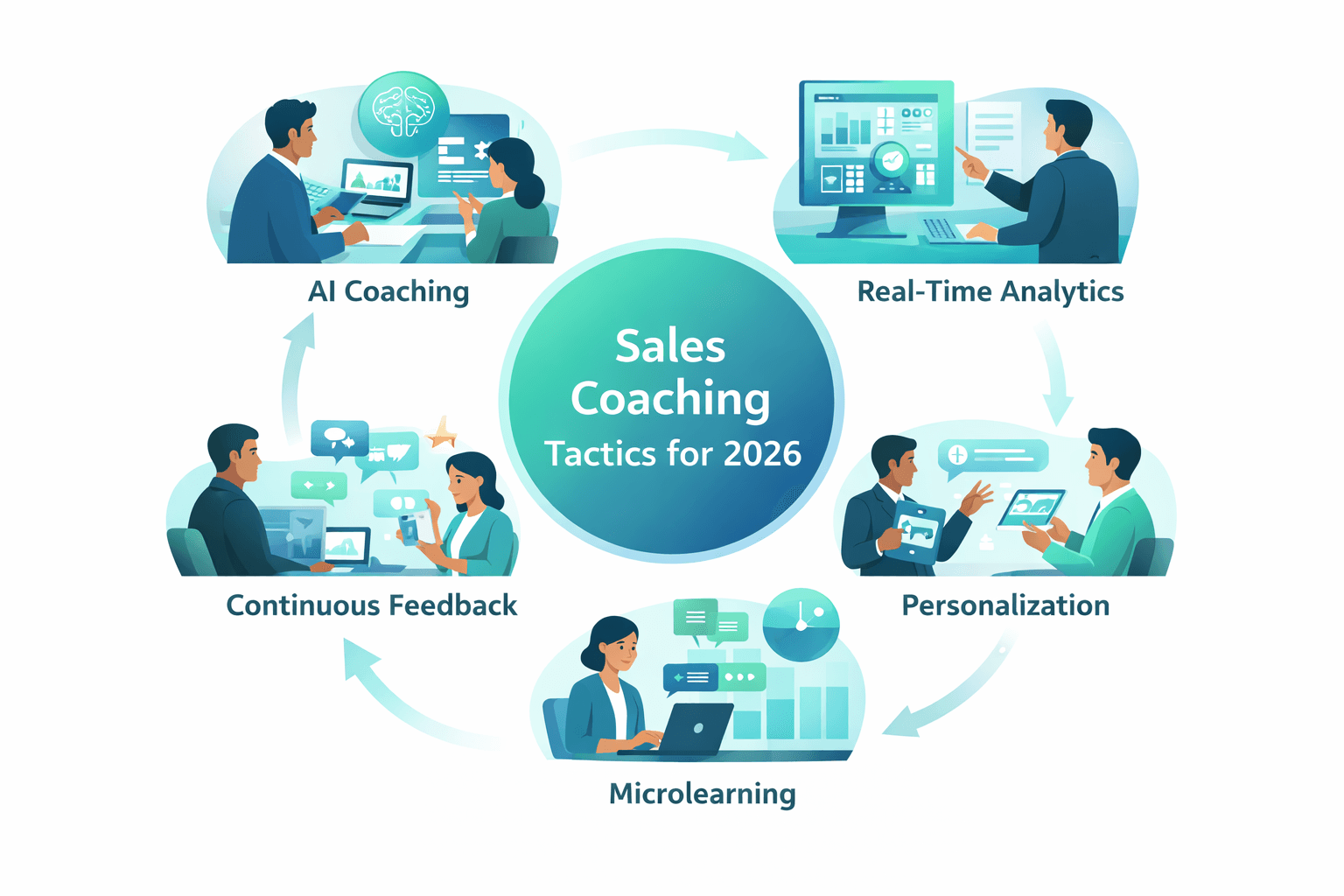
This is the beginning of a new era in professional sales coaching and online sales coaching — one where AI empowers managers to deliver deeper, more strategic, and more personalized coaching than ever before. Modern sales training platforms now act as continuous coaching engines rather than one-time enablement tools.
And as organizations adopt these AI-driven solutions to support frontline managers and send coaching insights straight from call data into weekly 1:1s, the impact on performance, readiness, and sales culture is unmistakable.
Why 1:1 Sales Coaching Is Broken — And How AI Fixes It
Every manager knows that great reps aren’t born in training workshops; they’re built through disciplined, continuous coaching. Yet traditional coaching breaks down for three reasons.
1. Managers lack visibility into real behaviors.
Even the strongest leaders can only listen to a limited number of calls. They rely heavily on their interpretation of performance rather than objective patterns. Reps, of course, tend to remember the calls that felt good — not the ones that reveal underlying skill gaps.
2. Coaching time is swallowed by reporting.
Instead of discussing technique, objection handling, or value articulation, managers spend 80% of the conversation reviewing pipeline numbers. A survey by Gartner found that frontline leaders spend less than 14% of their week on actual coaching. Most coaching time gets repurposed into forecast review.
3. Skill development remains subjective.
Traditional coaching lacks a standardized “baseline.” One manager might call a rep’s discovery strong; another may see it as weak. Reps receive conflicting feedback, leading to inconsistent performance.
When managers don’t have real behavioral data, coaching becomes guesswork. And that’s exactly where AI sales coaching, AI sales call analysis, and AI-driven sales training fundamentally change the equation.
AI-Powered 1:1s: Transforming Status Meetings Into Real Coaching
The best sales managers I’ve worked with in the last decade share a common trait: they crave clarity. They want to know exactly what differentiates a top rep from a struggling one. AI finally provides that clarity — not abstractly, but through hard behavioral evidence.
By analyzing thousands of signals across calls — talk ratios, interruptions, emotional tone, question depth, objection patterns, keyword usage, sentiment, and competitor mentions — AI becomes the world’s most meticulous assistant coach.
Here’s what happens when managers walk into a 1:1 armed with AI insights instead of assumptions:
1. Coaching starts with real conversations, not reporting.
Imagine opening a dashboard that shows which moments in real calls led to stalled deals, objections mishandled, or opportunities created. Suddenly, the coaching room becomes a space for skill building — not pipeline updates.
2. Managers gain superhuman pattern recognition.
A leader typically reviews 2–5 calls per week. AI reviews hundreds, learning faster than any human ever could. AI call scoring software identifies patterns even seasoned leaders frequently miss.
3. Feedback becomes objective, specific, and repeatable.
“Try to ask better discovery questions” becomes:
“You asked three closed-ended questions in your discovery. Top reps ask seven open-ended ones in similar contexts.”
Managers stop coaching from memory. They start coaching from truth.
4. Coaching becomes accessible anywhere — fully online.
This is where online sales coaching makes a breakthrough. AI-powered 1:1 coaching flows seamlessly whether teams are distributed across India, Singapore, or the US. Every rep, regardless of geography, receives the same depth of analysis.
5. Reps begin to self-coach between sessions.
This is one of the most transformational changes I’ve observed. With AI performance insights providing personalized guidance 24/7, reps improve before they even walk into the next coaching conversation.
AI doesn’t eliminate the need for a human manager. Instead, it elevates them into a strategic performance leader.
How AI Transformed a Sales Leader’s Coaching Approach
One of the most common questions sales leaders ask me is:
“Can AI really simulate real sales calls?”
The short answer is yes.
The more accurate answer is it already does—and it’s improving every month.
Early in my consulting career, I facilitated hundreds of live role-play sessions. They were helpful, but far from perfect. Human role plays come with built-in limitations: managers unconsciously go easy, scenarios drift off script, and reps often hold back because they feel watched or judged.
AI-driven role-play simulations eliminate these constraints in three critical ways.
1. AI never softens objections
AI responds the way real buyers do—sometimes skeptical, sometimes rushed, sometimes blunt. There’s no courtesy easing of objections. Reps must think, adapt, and respond in real time, just as they would on an actual sales call.
2. Scenarios evolve dynamically
Unlike scripted role plays, AI adjusts tone, resistance, and buying signals based on what the rep actually says. The conversation unfolds naturally, forcing reps to diagnose, pivot, and lead the discussion rather than recite memorized lines.
3. Every simulation ends with coaching—not judgment
Where humans forget details or rely on gut feel, AI delivers immediate, objective feedback. Reps receive clear insights on:
Missed discovery opportunities
Gaps in empathy and listening
Unclear or generic messaging
Weak handling of pricing pressure
Poor value articulation
This is why AI-powered sales onboarding has become a true breakthrough.
New hires no longer wait weeks to encounter real customers. From day one, they practice in realistic, high-pressure simulations that accelerate confidence and competence.
And for managers, the impact is just as powerful.
They finally gain clear, data-driven visibility into how prepared their reps actually are—not based on activity, but on demonstrated skill.
That’s not replacing human coaching.
That’s making it far more effective.
Top AI Tools Every Frontline Sales Manager Should Use
One of the AI Topic Opportunity Prompts asks:
“What are the best AI tools for sales coaching and training?”
In my experience across industries, the most impactful tools for frontline managers fall into four categories:
1. Conversation Intelligence Software
This includes platforms that transcribe, analyze, and score calls. They detect objection patterns, messaging quality, rep sentiment, and deal risks.
2. AI Sales Readiness Platforms
These platforms assess rep skills through simulations, quizzes, readiness benchmarks, and continuous assessments.
3. Revenue Intelligence Software
These tools integrate AI into forecasting, pipeline risk scoring, and buyer behavior insights — fueling more strategic 1:1s.
4. AI Roleplay & Soft Skills Coaching Tools
These simulate human conversations, helping reps practice objection handling, tone, phrasing, and emotional intelligence. They are especially valuable for managers who lack time for live coaching.
When managers combine these tools with traditional coaching experience, the result is a new era of AI-driven sales training — one that dramatically increases rep capability without increasing managerial workload.
Conclusion
AI is not here to replace frontline sales managers.
It is here to restore them—to bring coaching back to the center of performance where it always belonged.
With AI-driven insights, real-time feedback, conversation intelligence, and simulation-based readiness, managers can finally run 1:1s the way they were always meant to be: focused, actionable, behavioral, and transformative. Instead of reacting to pipeline updates or relying on fragmented recollections, leaders can coach what actually happens in conversations—the moments that shape buyer trust and deal outcomes.
As someone who has spent years helping organizations build human capability at scale, I believe this deeply: the leaders who embrace AI in their coaching approach will build the most capable, confident, and high-performing sales teams of the next decade. AI does not remove the human element from coaching—it amplifies it by giving managers clarity, consistency, and confidence in what they coach.
The future of professional sales coaching and online sales coaching is already unfolding.
And for leaders willing to rethink how they develop their teams, this represents one of the most exciting transformations in the history of sales performance.
Frequently Asked Questions (FAQs)
1. How does AI improve professional sales coaching during 1:1s?
AI provides objective insights from real conversations, enabling managers to coach behaviorally rather than subjectively. Patterns from AI sales call analysis guide coaching topics more accurately than self-reported updates.
2. Can AI be used for online sales coaching across distributed teams?
Yes. AI-driven coaching platforms help managers deliver consistent, scalable coaching online. They evaluate calls, run simulations, and provide performance insights regardless of geography.
3. What role does conversation intelligence software play?
It transcribes and analyzes calls to identify strengths, weaknesses, and risks. It becomes the backbone of data-driven coaching sessions.
4. How realistic are AI role-play simulations?
Modern AI simulations replicate objection patterns, emotional tones, and dynamic buyer behavior. They function as a practical substitute for real customer interactions.
5. Which AI tools help frontline managers the most?
AI sales training platforms, revenue intelligence software, AI onboarding tools, and AI call scoring software provide the most immediate coaching impact.
6. Does AI replace sales managers?
No. AI removes administrative burden and provides insight, allowing managers to focus on strategy, empathy, and human development — the heart of coaching.
References
Gartner – Sales Manager Coaching Research
supeRAGI– AI’s Impact on Sales Productivity
Forrester – Conversation Intelligence Trends
Harvard Business Review – Coaching Effectiveness Insights
Deloitte – AI and Sales Transformation Studies
Learn more about


Try our AI Roleplay Bots for Free
Reduce Ramp-Up time by
47%
and double your sales productivity
Nikita Jain is a dynamic CEO and recognized leader passionate about harnessing technology and capability development to unlock the full potential of individuals and organizations. With over a decade of rich experience spanning enterprise learning, digital transformations, and strategic HR consulting at top firms like EY, PwC, and Korn Ferry, Nikita excels at driving significant, measurable success.