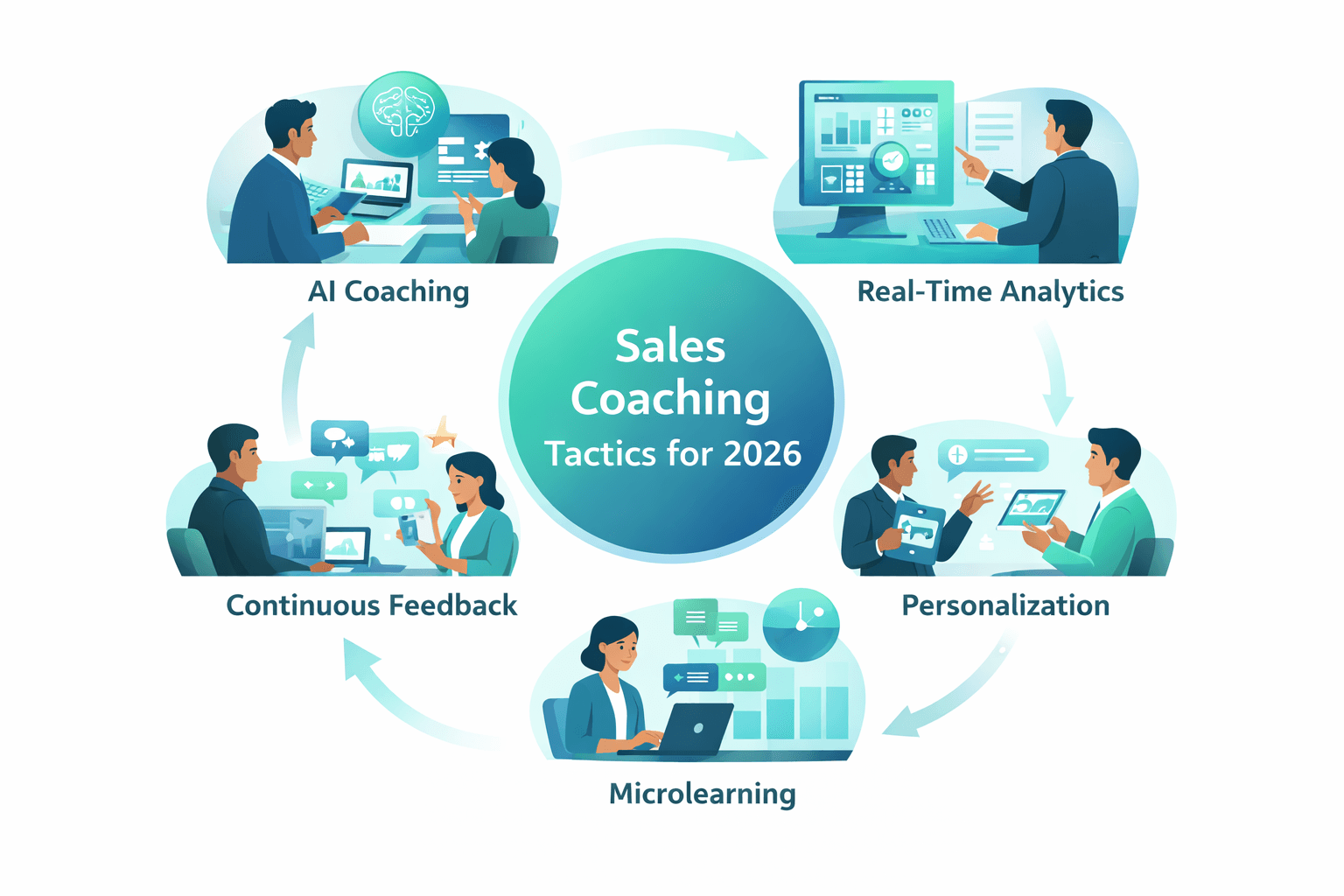
Sales Effectiveness

Maxim Dsouza

Introduction
Every sales organization has underperforming reps at some point. Missed targets, stalled pipelines, low confidence, or inconsistent execution are common challenges—especially in fast-moving, high-pressure sales environments. However, underperformance does not always mean lack of talent. In many cases, it signals gaps in skills, clarity, confidence, or support. This is where effective sales coaching becomes critical.
Why do sales reps underperform even after training?
Because training builds knowledge, but performance depends on behavior, confidence, execution, and ongoing reinforcement in real selling situations.
Should underperforming reps be coached or replaced?
Most underperformers should be coached first. With the right guidance and structure, many reps can improve quickly and sustainably.
What is the biggest mistake managers make with underperforming reps?
Focusing only on numbers instead of understanding skill gaps, mindset issues, or process breakdowns.
How is coaching underperformers different from coaching top performers?
Underperformers need clarity, structure, confidence-building, and targeted skill development rather than high-level strategic discussions.
Can sales coaching actually turn around poor performance?
Yes. When coaching is consistent, specific, and behavior-focused, it often leads to measurable improvement.
Sales coaching for underperforming reps is not about pressure or micromanagement. It is about diagnosing the root causes of poor performance and applying the right coaching techniques to help reps recover, grow, and contribute consistently. When handled correctly, coaching underperformers can significantly improve overall team performance and reduce costly attrition.
Click on use AI coaching to identify skill gaps.
How to Diagnose Sales Underperformance Before Starting Coaching
Before applying any sales coaching techniques, managers must first diagnose why a rep is underperforming. Coaching without diagnosis often leads to frustration on both sides. When managers jump straight to motivation talks or pressure tactics, they risk treating symptoms instead of causes. Effective coaching begins with clarity—understanding exactly what is holding the rep back.
Click on coach underperforming reps using data-driven insights.
Underperformance usually falls into a few core categories: skill gaps, execution gaps, mindset issues, or structural problems. Identifying which category applies allows managers to tailor coaching rather than using a one-size-fits-all approach. A rep missing quota due to weak discovery skills requires a very different coaching plan than one struggling with confidence or time management.
The diagnostic process should be collaborative, not interrogative. Reps are more receptive when coaching feels supportive rather than punitive. Managers should create a safe environment where reps can openly discuss challenges without fear of judgment.
Common indicators to analyze during diagnosis include:
Pipeline quality and deal progression patterns
Conversion rates between sales stages
Call behavior such as talk time and questioning depth
Follow-up consistency and responsiveness
Emotional signals like frustration, disengagement, or avoidance
Data should always guide the conversation. Reviewing CRM activity, call recordings, and past performance trends helps remove subjectivity. This shifts coaching discussions from opinions to observable behavior.
Once data is reviewed, managers should explore the rep’s perspective. Many underperforming reps already know they are struggling but may not understand why. Asking open-ended questions encourages ownership and insight.
Is underperformance usually a skill problem or a motivation problem?
More often, it’s a skill or execution problem. Motivation typically drops as a result of repeated failure, not the other way around.
How long should managers spend diagnosing before coaching?
Diagnosis should happen early but efficiently. One or two focused sessions are usually enough to identify key gaps.
What if a rep disagrees with the manager’s diagnosis?
Use data and examples. Alignment builds when both sides look at the same evidence and outcomes.
After identifying root causes, managers can categorize the issue and plan coaching accordingly. This prevents overcoaching and keeps interventions focused.
Typical root causes of underperformance include:
Weak discovery or qualification skills
Poor objection handling or closing ability
Inconsistent prospecting habits
Lack of product or industry understanding
Low confidence or fear of rejection
Overwhelm caused by unclear priorities
Not all issues are within the rep’s control. Structural factors such as territory imbalance, lead quality, or unclear expectations can also contribute. Managers must address these before expecting performance improvement.
Structural checks should include:
Fair distribution of leads and accounts
Clear definition of role expectations
Realistic targets aligned with territory potential
Adequate tools and enablement support
Once diagnosis is complete, coaching becomes more precise. Instead of vague encouragement, managers can focus on one or two priority behaviors that will have the greatest impact. This clarity reduces overwhelm and increases the likelihood of improvement.
Effective diagnosis sets the foundation for all future coaching. It ensures that underperforming reps feel understood rather than judged and gives managers a clear roadmap for intervention.
How Targeted Sales Coaching Turns Around Underperforming Reps
Once the root causes of underperformance are clear, the focus shifts to targeted coaching execution. The goal is not to overwhelm reps with multiple fixes at once, but to concentrate on a small number of high-impact behaviors that directly influence results. Effective coaching for underperforming reps is structured, behavior-focused, and consistently reinforced over time.
Coaching should begin by setting clear expectations. Reps need to know exactly what will change, how success will be measured, and what support they will receive. Ambiguity increases anxiety and resistance, while clarity builds confidence and accountability.
A practical coaching plan starts with prioritization. Managers should select one or two skills that will create the biggest performance lift. This keeps coaching focused and measurable.
High-impact coaching focus areas often include:
Improving discovery questioning and listening
Strengthening objection handling through practice
Building consistent prospecting habits
Enhancing call structure and agenda-setting
Increasing follow-up quality and discipline
Coaching conversations should be collaborative rather than directive. Managers should involve reps in identifying solutions and committing to actions. This increases ownership and reduces defensiveness.
What makes coaching effective for underperforming reps?
Specificity. Coaching must focus on observable behaviors and clear actions, not vague encouragement or pressure.
How often should managers coach underperforming reps?
Short, frequent coaching sessions—weekly or even biweekly—are more effective than infrequent long meetings.
Should coaching focus on mindset or skills first?
Skills first. Confidence improves naturally as reps experience small wins from better execution.
Role play is one of the most effective tools for coaching underperforming reps. It allows reps to practice difficult conversations in a safe environment and receive immediate feedback. Role play should be realistic and tied directly to the rep’s current challenges.
Effective role play coaching practices include:
Practicing real objections the rep is facing
Repeating the same scenario until improvement is visible
Pausing and restarting conversations to try alternatives
Reinforcing positive behaviors before correcting gaps
Managers should also reinforce coaching through real sales activity. This means connecting coaching actions to live calls, emails, and pipeline reviews. When reps see the direct link between coaching and outcomes, motivation increases.
Reinforcement methods that work well include:
Assigning one specific behavior to apply on the next call
Reviewing call recordings together
Tracking improvement in targeted metrics
Celebrating small performance gains publicly or privately
Consistency is critical. Many coaching efforts fail because managers stop too early or shift focus too quickly. Underperforming reps often need longer reinforcement cycles to break old habits and build new ones.
To maintain consistency, managers should:
Document coaching goals and actions
Review progress in every one-on-one
Adjust tactics based on results, not assumptions
Avoid introducing new focus areas too soon
Another important technique is rebuilding confidence through achievable goals. Large targets can feel overwhelming to underperforming reps. Breaking goals into smaller, controllable actions restores momentum.
Examples of confidence-building goals include:
Completing a set number of quality discovery calls
Improving one sales stage conversion rate
Successfully handling a common objection
Maintaining consistent daily prospecting activity
Finally, managers must balance support with accountability. Coaching is not about lowering standards. Clear timelines, expectations, and consequences ensure reps understand that improvement is required.
When targeted coaching techniques are applied with clarity, consistency, and empathy, underperforming reps often show significant improvement. More importantly, this approach strengthens overall team culture by demonstrating that performance challenges are addressed constructively—not reactively.
Click on support reps through structured sales team training.
How to Measure Progress and Sustain Performance Improvement in Sales Reps
After targeted coaching techniques are applied, the most critical phase begins: measuring progress and sustaining improvement. Many sales coaching efforts fail not because the coaching was poor, but because improvement was never tracked clearly or reinforced long enough. Underperforming reps need visibility into their progress just as much as managers do. Without measurement, coaching becomes subjective and motivation fades quickly.
Measurement should focus on behaviors first and results second. Revenue and quota attainment take time to improve, but behavior changes show up much earlier. Tracking these early indicators helps managers intervene quickly and prevents underperformance from becoming a long-term pattern.
Midway through coaching, managers often pause and reassess with important questions.
How do we know if coaching is actually working?
Coaching is working when reps consistently apply new behaviors, show improved confidence, and demonstrate progress in controllable metrics before results fully recover.
What should managers measure before quota improvement appears?
Activity quality, consistency of execution, and skill application should be measured before revenue outcomes.
How long should a performance turnaround take?
Most reps show early behavioral improvement within 30–45 days, while revenue impact typically follows in 60–90 days.
Once expectations are clear, managers should shift into structured tracking and reinforcement. Progress must be visible, objective, and reviewed regularly.
Key behavior-based indicators to track include:
Consistency in prospecting activity and follow-up
Quality of discovery questions and call structure
Reduction in repeated mistakes identified during coaching
Willingness to apply feedback in live calls
Increased confidence and engagement during conversations
These indicators help managers validate effort and improvement even before pipeline numbers recover. This prevents discouragement and keeps reps engaged in the coaching process.
As behavior improves, outcome-based metrics should gradually be reintroduced. These metrics confirm whether skill improvements are translating into performance gains.
Important outcome indicators to monitor include:
Conversion rates between sales stages
Improvement in deal qualification quality
Reduction in stalled or unqualified opportunities
Increased pipeline movement velocity
Gradual recovery of quota attainment
Sustaining improvement requires consistency from managers. Coaching cannot stop the moment numbers improve. Old habits return quickly if reinforcement disappears. Managers should continue reinforcing the same behaviors even after early success appears.
Effective reinforcement practices include:
Reviewing coaching goals in every one-on-one
Revisiting the same skills through role play
Providing feedback on both wins and misses
Reinforcing standards consistently across the team
Another critical factor is accountability. Coaching should always include clear commitments from reps. These commitments must be specific, time-bound, and reviewed consistently.
Strong accountability structures include:
Written action plans with weekly check-ins
Clear timelines for expected improvement
Shared ownership of outcomes between rep and manager
Transparent discussion of consequences if progress stalls
Peer visibility can also support sustained improvement. When appropriate, managers can involve reps in team learning without singling them out negatively. This normalizes development and reduces stigma around coaching.
Healthy peer reinforcement approaches include:
Sharing best practices from role play sessions
Celebrating behavior improvement publicly
Encouraging peer-to-peer feedback
Finally, managers must know when coaching is no longer the right solution. Not every rep will improve despite best efforts. Clear timelines and documented progress protect both the organization and the individual.
Click on apply performance coaching techniques for sales reps.
By measuring the right indicators, reinforcing consistently, and maintaining accountability, sales leaders can turn coaching from a short-term intervention into a sustainable performance system. This approach not only improves individual reps but strengthens overall sales culture by making growth, feedback, and accountability part of everyday work.
Conclusion
Coaching underperforming sales reps is one of the most important responsibilities of a sales manager. When handled with structure, empathy, and consistency, coaching can transform poor performance into steady improvement. The key lies in accurate diagnosis, targeted skill development, regular reinforcement, and clear accountability. Rather than relying on pressure or assumptions, effective sales coaching focuses on observable behaviors and measurable progress. By tracking early indicators, reinforcing improvements, and sustaining coaching beyond short-term gains, organizations create a culture where underperformance is addressed constructively and improvement becomes achievable. This approach not only recovers individual performance but also strengthens overall team capability and morale.
Frequently Asked Questions
1. Why do sales reps underperform despite training?
Because training builds knowledge, but consistent execution and confidence require ongoing coaching and reinforcement.
2. Should underperforming reps always be put on performance plans?
Not immediately. Coaching should be the first step before formal performance actions.
3. How long does it take to turn around an underperforming rep?
Behavioral improvement often appears in 30–45 days, with revenue improvement in 60–90 days.
4. What is the biggest coaching mistake managers make?
Focusing only on numbers instead of diagnosing skill and behavior gaps.
5. How often should underperforming reps be coached?
Short, frequent sessions—weekly or biweekly—are most effective.
6. Can role play help underperforming reps improve faster?
Yes. Role play allows safe practice and immediate feedback on real selling challenges.
7. Should coaching focus more on skills or motivation?
Skills first. Confidence improves naturally as skills and results improve.
8. How do managers track coaching effectiveness?
By monitoring behavior changes, activity quality, and gradual performance recovery.
9. What if a rep shows no improvement after coaching?
Clear timelines and accountability help determine when other actions are necessary.
10. Does coaching underperformers impact team morale?
When done constructively, it improves morale by showing commitment to development.
Learn more about


Try our AI Roleplay Bots for Free
Reduce Ramp-Up time by
47%
and double your sales productivity
Maxim Dsouza is the Chief Technology Officer at Eubrics, where he drives technology strategy and leads a 15‑person engineering team. Eubrics is an AI productivity and performance platform that empowers organizations to boost efficiency, measure impact, and accelerate growth. With 16 years of experience in engineering leadership, AI/ML, systems architecture, team building, and project management, Maxim has built and scaled high‑performing technology organizations across startups and Fortune‑100. From 2010 to 2016, he co‑founded and served as CTO of InoVVorX—an IoT‑automation startup—where he led a 40‑person engineering team. Between 2016 and 2022, he was Engineering Head at Apple for Strategic Data Solutions, overseeing a cross‑functional group of approximately 80–100 engineers.