Workforce Development

Maxim Dsouza
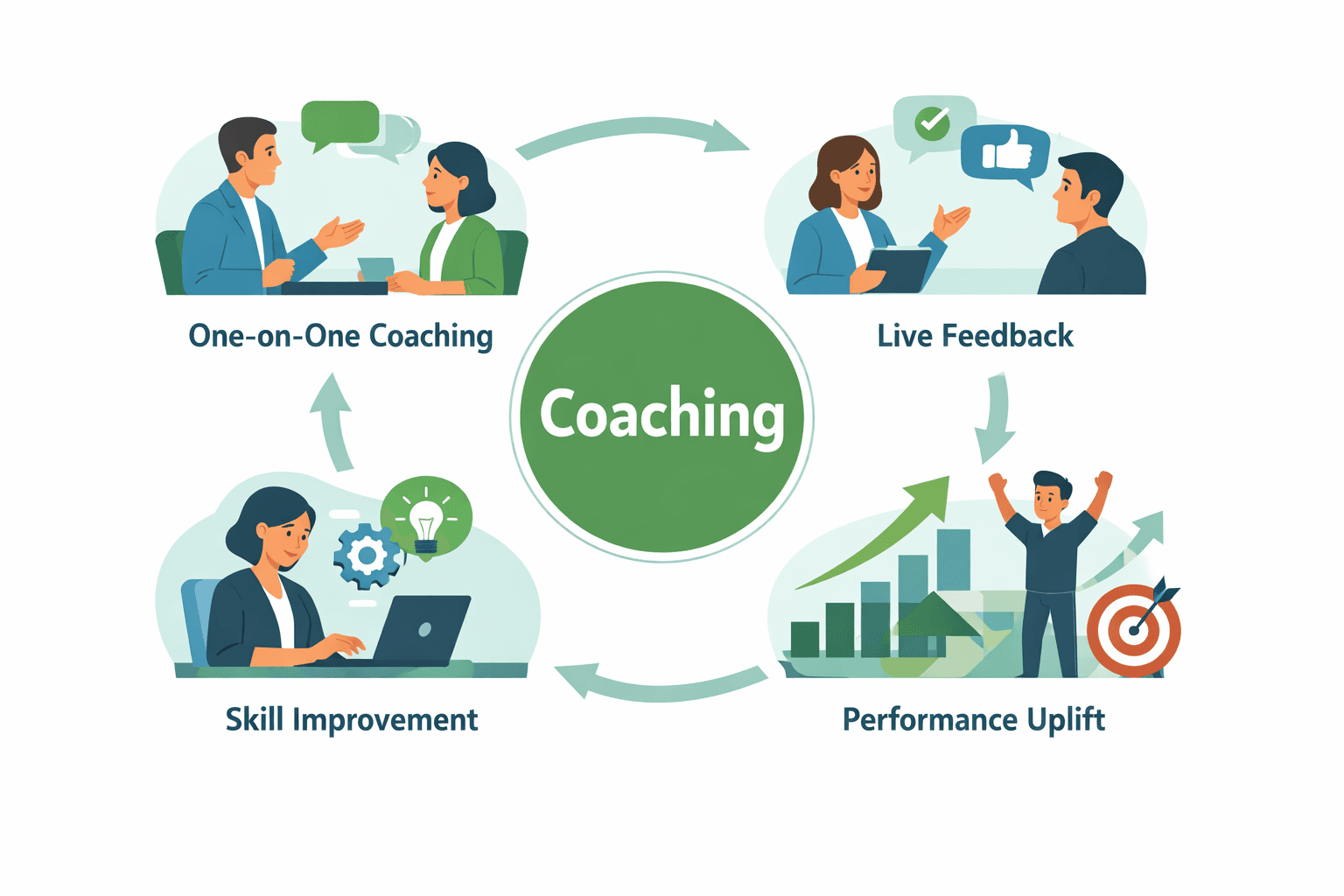
Introduction
Some employees grow rapidly under certain managers, while others stagnate—even when they have similar skills and roles. The difference is rarely talent alone. More often, it comes down to coaching. Not formal training programs or annual feedback sessions, but everyday coaching moments that help employees think better, act with confidence, and improve performance over time.
Effective workplace coaching is often misunderstood. Many managers assume coaching means giving advice, solving problems, or telling employees what to do. In reality, coaching is about guiding employees to discover better approaches themselves. It focuses on behaviors, decision-making, and skill development rather than just outcomes. When done well, coaching builds ownership, accountability, and confidence instead of dependence on the manager.
Coaching improves performance when it is specific, timely, and connected to real work. Employees who receive consistent coaching are more engaged, more self-aware, and faster to adapt to change. Rather than feeling micromanaged, they develop stronger judgment and take greater responsibility for their results.
This matters more than ever in today’s workplace. Roles are evolving faster than job descriptions, tools and processes change frequently, and performance expectations continue to rise. Without regular coaching, small gaps in performance often go unnoticed until they become bigger problems. With coaching, those same gaps turn into learning moments that drive growth.
Strong managers integrate coaching into everyday interactions—during one-on-ones, after meetings, in project check-ins, or following key decisions. Coaching conversations sound different from feedback or training. Instead of focusing on what went wrong or what to do next time, they help employees reflect, identify patterns, and choose better actions going forward.
When managers coach effectively, execution does not slow down—it improves. Employees become more capable, more confident, and less reliant on constant direction. Over time, this creates teams that perform consistently and continue to grow.
This blog breaks down practical workplace coaching examples that improve employee performance, showing how managers can turn everyday conversations into powerful moments of development rather than waiting for formal coaching sessions.
Why Practical Workplace Coaching Examples Matter More Than Theory
Most managers understand the concept of coaching, but struggle to apply it consistently in real work situations. They attend leadership sessions, learn coaching models, and agree with the principles—yet default to giving instructions when pressure rises. This gap between knowing and doing is why practical workplace coaching examples are so critical.
Coaching is not a separate activity added to a manager’s workload. It happens in everyday moments—after a missed deadline, during a 1:1, following a client call, or when an employee seems stuck. Without concrete examples, managers often don’t recognize these moments as coaching opportunities.
One key reason coaching fails is misunderstanding its purpose. Many managers believe coaching is about correcting mistakes. In reality, coaching is about improving thinking. When employees understand why they do something a certain way, performance improvement becomes sustainable rather than temporary.
Another challenge is time pressure. Managers worry that coaching conversations will slow execution. As a result, they jump straight to solutions. While this feels efficient, it creates dependency and limits employee growth.
These challenges show up in common patterns:
Managers giving answers instead of asking questions
Coaching only happening when something goes wrong
High performers receiving little coaching because they “seem fine”
Employees waiting for direction instead of taking initiative
Feedback focused on outcomes, not behaviors
At this stage, managers often ask important questions.
How is coaching different from feedback or training?
Feedback evaluates past behavior. Training builds knowledge. Coaching improves future performance by developing thinking and decision-making in real situations.
What if employees don’t respond well to coaching questions?
That’s normal at first. Coaching is a learned interaction. With consistency, employees become more reflective and engaged.
Does coaching work for experienced employees?
Yes. In fact, experienced employees often benefit most from coaching that challenges assumptions and stretches capability.
Practical coaching examples help managers translate intent into action. Instead of generic advice, managers learn how to respond in specific moments—missed goals, confidence dips, or decision paralysis.
Effective workplace coaching focuses on:
Clarifying expectations before problems arise
Exploring what worked and what didn’t after key tasks
Helping employees identify obstacles and options
Reinforcing strengths while addressing gaps
Encouraging ownership of next steps
Coaching also strengthens trust. When employees feel supported rather than judged, they are more open about challenges early—before performance drops.
Organizations that rely only on training miss this leverage. Skills fade if they’re not reinforced through coaching. Coaching bridges the gap between learning and application.
Importantly, coaching does not require long sessions. Many high-impact coaching moments happen in five-minute conversations. The value comes from quality, not duration.
When managers see real coaching examples, their confidence increases. They stop worrying about “doing it wrong” and start focusing on curiosity and clarity. Over time, coaching becomes part of how work gets done—not a special event.
Practical Workplace Coaching Examples That Drive Real Performance Improvement
Effective workplace coaching shows up in everyday situations, not formal scripts. Managers who consistently improve employee performance use simple, repeatable coaching approaches that help employees reflect, adjust, and take ownership. These examples are most powerful when applied in the flow of work, where learning connects directly to results.
One common coaching moment is after a missed goal or underwhelming outcome. Instead of pointing out what went wrong, effective managers explore thinking and process. Asking what the employee aimed to achieve, what actually happened, and what they would do differently next time encourages accountability without blame. When managers worry that this approach feels too soft, the reality is that clarity and ownership drive stronger correction than criticism.
Another high-impact example is coaching during 1:1s when performance is steady but not improving. Many managers assume coaching is only needed when something breaks. In practice, plateaued performance is one of the best coaching opportunities. A simple question about what feels challenging or repetitive often surfaces hidden blockers. Managers sometimes ask whether coaching at this stage creates unnecessary pressure. In most cases, it signals investment and helps employees re-engage with growth.
Coaching is also highly effective after a successful task or win. Instead of just praising results, managers reinforce behaviors. Discussing what the employee did well and why it worked helps lock in repeatable success. This answers a common concern about whether coaching should always focus on gaps. Reinforcing strengths is one of the fastest ways to improve overall performance.
In day-to-day work, managers frequently coach around decision-making and confidence. When employees seek approval for every step, coaching shifts the dynamic. Rather than giving an answer, managers ask what options the employee sees and which they would choose. This builds judgment over time. While managers may worry this slows things down, it reduces dependency and speeds execution in the long run.
Clear patterns emerge when workplace coaching is used effectively:
Coaching focuses on behaviors and thinking, not personality
Conversations are specific to real tasks and situations
Managers listen more than they speak
Employees leave with clear next steps they own
Progress is revisited, not forgotten
Another powerful example is coaching during change or new responsibilities. When roles shift, employees often hesitate to admit uncertainty. Coaching creates space to talk through priorities, risks, and learning curves. Managers sometimes wonder if this replaces training. In reality, coaching complements training by helping employees apply new knowledge confidently.
Workplace coaching also plays a key role in addressing early signs of underperformance. Waiting for formal reviews allows small issues to grow. Coaching early—by exploring expectations, obstacles, and support needed—keeps performance conversations constructive rather than corrective.
Managers often question whether coaching works with high performers. In practice, high performers respond well to coaching that stretches thinking, challenges assumptions, and aligns growth with future opportunities. Coaching at this level prevents disengagement and signals trust.
Effective coaching conversations consistently include:
A clear context for why the discussion matters
Open-ended questions that prompt reflection
A balance of support and accountability
Agreement on specific actions
Follow-up to reinforce learning
Over time, these examples compound. Employees become more proactive, reflective, and confident. Managers spend less time firefighting and more time enabling growth. Performance improves not because people are told what to do, but because they learn how to think better at work.
How Managers Can Use Workplace Coaching Consistently to Improve Performance
Workplace coaching becomes truly powerful when it is consistent. Occasional coaching conversations may feel supportive, but they rarely lead to sustained performance improvement. Employees improve when coaching is predictable, embedded in daily work, and aligned with expectations. This consistency turns coaching from a “nice leadership behavior” into a performance system.
Many managers start with good intent but struggle to maintain coaching habits. Under pressure, they revert to directing, fixing, or avoiding conversations altogether. The goal is not perfection—it’s reliability. When employees know coaching is part of how work happens, they prepare differently, reflect more deeply, and take greater ownership.
In the middle of this shift, managers often pause with key concerns.
How do I coach consistently without sounding repetitive or scripted?
Consistency does not mean repeating the same words. It means using the same structure—clarifying context, exploring thinking, and agreeing on actions—while adapting the conversation to each situation.
What if coaching feels unnatural or uncomfortable at first?
That’s expected. Coaching is a skill. Discomfort fades as managers practice curiosity instead of control and see better responses from employees.
How do I coach when performance issues are urgent?
Coaching and urgency are not opposites. Even brief coaching moments help employees think clearly under pressure, reducing repeated mistakes.
Once these questions are addressed, consistency comes from deliberate habits rather than motivation. Managers who coach well don’t wait for perfect moments—they use regular interactions as anchors.
Key ways managers can build consistent workplace coaching include:
Using 1:1 meetings as coaching conversations, not status updates
Reflecting briefly after key tasks, meetings, or deliverables
Asking thinking-focused questions before giving answers
Linking coaching discussions to clear expectations and goals
Revisiting agreed actions in follow-up conversations
Consistency also depends on boundaries. Coaching is not therapy, nor is it micromanagement. Managers stay focused on work-related behaviors, decisions, and outcomes. This clarity keeps conversations productive and professional.
Another critical element is follow-through. Coaching loses credibility when conversations end without reinforcement. Employees notice when managers ask reflective questions once and then move on. Revisiting commitments signals that coaching matters.
Managers should reinforce coaching by:
Acknowledging progress, not just final results
Addressing gaps early instead of waiting for formal reviews
Connecting coaching themes across multiple conversations
Encouraging employees to bring topics for coaching proactively
Over time, consistent coaching changes team dynamics. Employees become more self-aware and proactive. They start anticipating questions instead of waiting for instructions. Managers gain time as dependency decreases.
Organizations that support coaching consistency see faster capability building than those relying only on training. Skills stick when they are coached in real situations. Coaching becomes the bridge between learning and execution.
It’s important to note that consistency does not mean intensity. Short, focused coaching moments—two minutes after a task or five minutes in a check-in—often have more impact than long, infrequent sessions.
When workplace coaching is consistent, performance improvement feels natural rather than forced. Employees don’t experience coaching as correction; they experience it as support for doing better work. Managers stop carrying performance alone and start sharing responsibility with their teams.
This is why consistent workplace coaching is one of the most effective—and scalable—ways to improve employee performance. It shapes thinking, builds confidence, and creates a culture where growth is part of everyday work, not an occasional initiative.
Conclusion
Workplace coaching is not about fixing employees—it’s about enabling better thinking, better decisions, and better performance over time. When managers use practical coaching examples consistently, employees become more confident, accountable, and adaptable. Unlike one-time training or annual feedback, coaching works in real moments where performance is shaped. Organizations that build coaching into everyday management don’t just improve results—they build resilient teams that learn faster and perform better under pressure.
FAQs
What is workplace coaching?
Workplace coaching is an ongoing process where managers guide employees to improve performance through reflection and action.
How is coaching different from feedback?
Feedback looks backward; coaching focuses on improving future performance.
Can coaching really improve employee performance?
Yes, when it’s specific, timely, and tied to real work situations.
Do managers need formal training to coach?
Training helps, but consistent practice matters more than formal certification.
How often should workplace coaching happen?
Ideally, in small moments throughout daily work—not just formal sessions.
Does coaching work for high performers?
Absolutely. Coaching helps high performers stretch and avoid stagnation.
What are simple coaching examples managers can use?
Post-task reflections, decision-making discussions, and goal-alignment conversations.
Can coaching replace training programs?
No. Coaching reinforces and applies what training teaches.
How long should a coaching conversation be?
Often just 5–10 minutes when done consistently.
Why is coaching important for long-term performance?
Because it builds capability, ownership, and continuous improvement.

Use our AI-driven Employee Development Platform to personalise learning, deliver real-time guidance, and drive 3x productivity and performance across your workforce.
Discover More
Increase Learning Outcomes by
87%
and maximize your talent potential
Maxim Dsouza is the Chief Technology Officer at Eubrics, where he drives technology strategy and leads a 15‑person engineering team. Eubrics is an AI productivity and performance platform that empowers organizations to boost efficiency, measure impact, and accelerate growth. With 16 years of experience in engineering leadership, AI/ML, systems architecture, team building, and project management, Maxim has built and scaled high‑performing technology organizations across startups and Fortune‑100. From 2010 to 2016, he co‑founded and served as CTO of InoVVorX—an IoT‑automation startup—where he led a 40‑person engineering team. Between 2016 and 2022, he was Engineering Head at Apple for Strategic Data Solutions, overseeing a cross‑functional group of approximately 80–100 engineers.