Sales Effectiveness

Nikita Jain

Introduction
In 2025, the landscape of sales is evolving at an unprecedented pace, driven by increasingly complex buyer behaviors, accelerated decision-making cycles, and heightened competition across industries. In this dynamic environment, a well-structured sales coaching program has become essential for organizations aiming to ensure that their sales teams are fully prepared, skilled, and adaptable. A comprehensive sales coaching program goes far beyond simply enhancing individual abilities; it plays a pivotal role in strengthening team alignment, reinforcing consistent sales methodologies, accelerating revenue growth, and fostering a culture of continuous learning and improvement across the organization.
Click on Best AI Tools for Sales Reps (Compared Across 7 Use Cases)
Modern sales coaching programs are no longer confined to occasional workshops, periodic one-on-one sessions, or ad hoc feedback. Instead, they are strategically designed to be structured, measurable, and deeply integrated into daily sales workflows, creating an environment where learning and performance improvement occur continuously. By embedding coaching management sales training into the routine operations of the sales team, HR leaders and managers can provide consistent guidance, monitor progress in real time, and deliver actionable feedback that drives meaningful improvements at both the individual and team levels. This integration ensures that every member of the sales force benefits from repeated practice, reinforcement of best practices, and exposure to structured coaching scenarios that are aligned with organizational objectives.
Investing in a robust sales coaching program that incorporates comprehensive coaching management sales training enables organizations to scale learning effectively, ensuring consistency across multiple teams, regions, or product lines. By tracking key performance indicators, evaluating the impact of coaching sessions, and leveraging data-driven insights, managers can optimize the program for maximum impact. Research indicates that organizations with structured sales coaching programs experience as much as 17% higher revenue growth compared to organizations without such programs, demonstrating the tangible business benefits of adopting a holistic, structured, and integrated approach to coaching management sales training.
Click on How Managers Can Use AI to Improve Sales Team Performance
Common Challenges in Implementing Sales Coaching Programs
Despite the clear benefits of investing in sales coaching programs, many organizations continue to face significant challenges in implementing them effectively. One of the most common obstacles is a lack of structure; programs that are ad hoc, inconsistent, or poorly planned often fail to deliver measurable improvements in team performance or individual skill development. Without a clearly defined framework, even well-intentioned coaching initiatives can fall short of driving meaningful results.
Click on Sales Role Play Scenarios: 12 Realistic Situations Every Rep Should Practice
Another major challenge lies in insufficient manager training. Sales managers, who are critical to delivering effective coaching, may lack the skills, tools, or confidence required to execute coaching management sales training successfully. Without properly trained managers, even the most sophisticated sales coaching program cannot achieve its intended outcomes, leaving team members without the guidance they need to grow and improve.
Limited integration of coaching management sales training into broader organizational learning initiatives is also a significant barrier. Programs that are disconnected from daily workflows, onboarding processes, or other sales training subjects can feel isolated, reducing engagement and adoption among sales teams. Additionally, poor feedback loops further hinder effectiveness; without timely, actionable, and data-driven feedback, sales representatives struggle to identify gaps in their performance or adjust their approach, which undermines the impact of the sales coaching program.
Resistance to change is another critical factor. Teams accustomed to traditional or informal training methods may hesitate to embrace a more structured, consistent, and metrics-driven sales coaching program. This reluctance can slow adoption and reduce overall program effectiveness. Recognizing and addressing these challenges—by implementing structured, integrated, and manager-led coaching management sales training—enables organizations to design programs that are both sustainable and impactful, driving measurable outcomes, improving performance across teams, and supporting long-term organizational growth.
Click on AI Sales Prospecting Tools: What Actually Works in B2B?
Core Components of a Good Sales Coaching Program
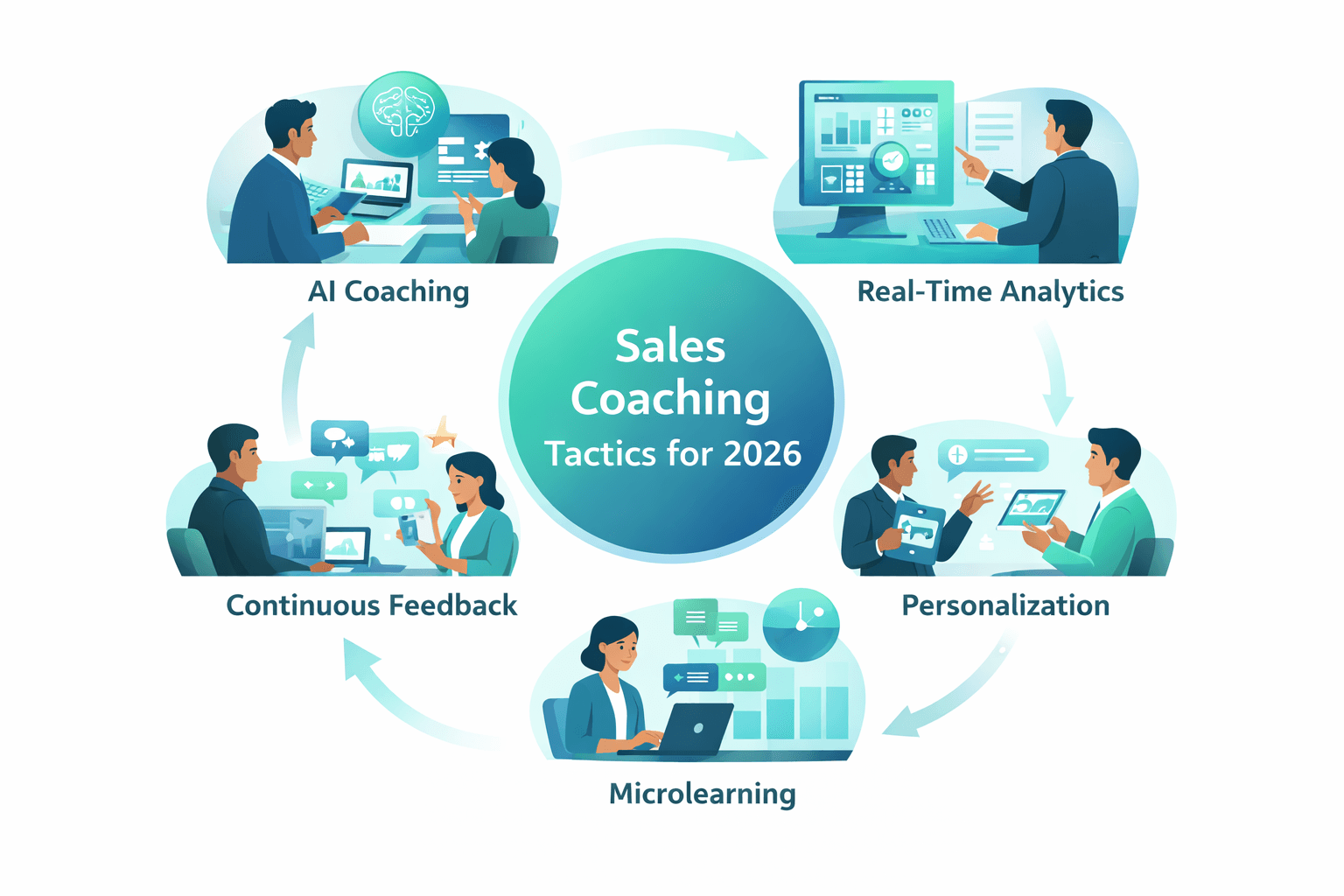
An effective sales coaching program in 2025 should include several critical components:
1. Clear Objectives and Metrics
Every sales coaching program must define clear objectives, aligned with overall business goals. This includes establishing sales performance metrics, key performance indicators, and measurable outcomes. Regular tracking ensures accountability and demonstrates the impact of coaching initiatives.
2. Structured Coaching Management Sales Training
Programs should include standardized coaching management sales training modules for managers, equipping them with techniques to deliver effective feedback, guide development, and reinforce key skills. Consistency in manager-led coaching ensures uniform skill development across the team.
3. Personalized Development Plans
Individualized coaching plans address specific skill gaps, experience levels, and role requirements. Tailored development ensures that every sales representative receives targeted guidance and actionable strategies for improvement.
4. Real-Time Feedback and Analytics
Incorporating data-driven insights and real-time feedback mechanisms allows managers to monitor performance continuously. Advanced learning management platforms can track engagement, progress, and behavioral trends, enabling timely interventions.
5. Integration With Broader Training Programs
A strong sales coaching program complements other sales training initiatives, ensuring alignment with overall learning objectives. Coaching management sales training should connect with onboarding, product training, and role-specific skill development programs.
6. Continuous Reinforcement and Practice
Skill retention improves when coaching is reinforced through ongoing practice. Structured exercises, roleplay scenarios, and application in real-world contexts help embed learning and enhance performance under pressure.
7. Scalability and Accessibility
In modern organizations, coaching must scale across multiple regions, teams, and experience levels. Leveraging digital learning platforms ensures accessibility and consistent delivery, making it easier to maintain program standards organization-wide.
Benefits of a Well-Designed Sales Coaching Program
Implementing a comprehensive sales coaching program delivers measurable and strategic benefits:
Improved individual and team performance through targeted skill development.
Enhanced consistency in sales messaging and process adherence.
Faster onboarding for new hires, reducing ramp-up time.
Higher retention and engagement among top-performing sales representatives.
Data-driven insights that inform leadership decisions and resource allocation.
Stronger alignment between daily sales activities and broader business objectives.
These benefits highlight why investing in a structured and modern sales coaching program is critical for organizations aiming to thrive in today’s competitive sales environment.
Actionable Checklist for HR Leaders and Managers
To ensure your sales coaching program is comprehensive and effective in 2025, consider this checklist:
Define program objectives aligned with business goals.
Establish measurable sales performance metrics and KPIs.
Include structured coaching management sales training modules for managers.
Develop personalized development plans for all sales representatives.
Implement real-time feedback mechanisms and analytics dashboards.
Integrate coaching with broader sales training initiatives.
Provide ongoing reinforcement and practical exercises.
Ensure scalability across regions, teams, and experience levels.
Regularly evaluate program effectiveness and make iterative improvements.
Foster a culture of continuous learning, accountability, and high performance.
Following this checklist helps HR leaders and managers create a sales coaching program that drives measurable results, supports continuous improvement, and builds high-performing sales teams.
Conclusion
In 2025, a sales coaching program is no longer simply a training initiative; it represents a strategic investment in overall organizational performance, capable of driving measurable business outcomes and long-term growth. By embedding structured coaching management sales training into everyday workflows, organizations ensure that every team member receives consistent guidance, actionable feedback, and practical skill reinforcement. When combined with personalized development plans tailored to the unique needs, experience levels, and roles of individual sales representatives, a robust sales coaching program fosters a culture of continuous learning, accountability, and high performance across the entire sales organization.
A well-designed sales coaching program delivers benefits far beyond individual skill improvement. It enhances team alignment, ensures consistent application of best practices, and creates a shared understanding of sales processes and objectives. The integration of coaching management sales training provides managers with the tools and frameworks needed to guide their teams effectively, monitor performance, and adjust strategies in real time. This approach not only accelerates revenue growth but also supports employee retention by demonstrating investment in professional development, building confidence, and empowering sales representatives to perform at their highest potential.
Moreover, modern sales coaching programs prepare organizations to navigate increasingly complex and competitive markets. By leveraging structured coaching management sales training, real-time feedback mechanisms, and data-driven insights, companies can proactively identify performance gaps, optimize team performance, and reinforce critical skills. Ultimately, implementing a comprehensive sales coaching program in 2025 is a strategic decision that transforms training into a continuous, measurable, and scalable process, equipping sales teams to achieve excellence, drive business success, and maintain a competitive edge in a rapidly evolving marketplace.
Click on Conversational AI for Sales: How It Works & Where It Helps Most
Frequently Asked Questions (FAQ)
1. What is a sales coaching program?
A sales coaching program is a structured initiative designed to improve the skills, performance, and effectiveness of sales teams. It involves targeted coaching management sales training, personalized development plans, and ongoing feedback to help sales representatives achieve their goals.
2. Why is a sales coaching program important in 2025?
In 2025, buyer behaviors are more complex, decision cycles are faster, and competition is higher. A well-structured sales coaching program ensures teams are prepared, aligned, and equipped to perform at their best while fostering a culture of continuous learning and accountability.
3. What does coaching management sales training include?
Coaching management sales training equips managers with the skills, frameworks, and tools to guide their teams effectively. It includes techniques for delivering actionable feedback, tracking performance, designing personalized development plans, and reinforcing best practices.
4. How does a sales coaching program improve team performance?
By integrating structured coaching management sales training, providing real-time feedback, and implementing personalized development plans, a sales coaching program enhances skill application, ensures alignment across teams, and accelerates revenue growth.
5. Can a sales coaching program be scaled across multiple teams or regions?
Yes. Modern sales coaching programs are designed to be scalable and consistent. By leveraging digital platforms and structured coaching management sales training, organizations can provide the same quality of coaching across multiple teams, regions, or product lines.
5. Can a sales coaching program be scaled across multiple teams or regions?
Yes. Modern sales coaching programs are designed to be scalable and consistent. By leveraging digital platforms and structured coaching management sales training, organizations can provide the same quality of coaching across multiple teams, regions, or product lines.
6. How do organizations measure the effectiveness of a sales coaching program?
Effectiveness can be measured using performance metrics such as conversion rates, revenue growth, skill improvement, and employee engagement. Feedback loops, manager assessments, and analytics from coaching management sales training also provide insights into program success.
7. How is a sales coaching program different from traditional sales training?
Unlike traditional sales training, which often occurs as periodic workshops or one-off sessions, a sales coaching program is continuous, structured, measurable, and integrated into daily workflows. It focuses on personalized skill development, real-time feedback, and consistent reinforcement.
8. What are the benefits of implementing a sales coaching program?
Benefits include improved individual and team performance, higher revenue growth, enhanced retention, consistent skill application, stronger team alignment, and the creation of a culture of continuous learning and accountability.
9. How often should coaching management sales training occur?
Coaching management sales training should be ongoing, with structured sessions, real-time feedback, and reinforcement built into daily workflows. Continuous engagement ensures skill retention and consistent performance improvement.
10. Can sales coaching programs integrate with other learning initiatives?
Yes. A strong sales coaching program should complement broader sales training initiatives, onboarding programs, and role-specific skill development. Integration ensures alignment, reinforces learning, and maximizes overall impact.
References
Harvard Business Review – The Impact of Sales Coaching on Performance
https://hbr.org/2023/03/the-impact-of-sales-coaching-on-performanceSalesforce Research – Best Practices in Sales Coaching Programs
https://www.salesforce.com/research/best-practices-sales-coaching/Forrester – Sales Coaching in the Age of AI and Analytics
https://www.forrester.com/report/sales-coaching-in-the-age-of-ai/Training Industry – Designing Effective Sales Coaching Programs
https://trainingindustry.com/articles/sales/designing-effective-sales-coaching-programs/LinkedIn Learning – Modern Approaches to Sales Coaching and Management
https://www.linkedin.com/learning/blog/modern-sales-coaching-and-managementMcKinsey & Company – Driving Sales Performance Through Coaching
https://www.mckinsey.com/business-functions/marketing-and-sales/our-insights/driving-sales-performance-through-coaching
Learn more about


Try our AI Roleplay Bots for Free
Reduce Ramp-Up time by
47%
and double your sales productivity
Nikita Jain is a dynamic CEO and recognized leader passionate about harnessing technology and capability development to unlock the full potential of individuals and organizations. With over a decade of rich experience spanning enterprise learning, digital transformations, and strategic HR consulting at top firms like EY, PwC, and Korn Ferry, Nikita excels at driving significant, measurable success.