Sales Effectiveness

Maxim Dsouza

Introduction
In today’s fast-paced and constantly evolving business environment, sales teams must continuously adapt to shifting buyer behaviors, changing market trends, and increasingly sophisticated customer expectations. Simply relying on traditional sales training subjects is no longer sufficient to equip teams with the skills they need to perform at a high level. This is where sales drills become a crucial component of effective sales coaching training. Unlike generic exercises, sales drills are carefully structured and targeted activities designed to develop practical skills, build muscle memory, and enhance problem-solving abilities in real-time sales scenarios. By incorporating these drills into sales coaching training programs, organizations can bridge the gap between theory and practice, ensuring that knowledge gained through sales training subjects translates directly into actionable results in the field.
Click on Best AI Tools for Sales Reps (Compared Across 7 Use Cases)
For HR leaders, managers, and professionals responsible for the performance and development of sales teams, integrating sales drills into sales coaching training programs is essential. Well-designed sales drills allow team members to practice objection handling, closing techniques, and prospecting strategies in a controlled environment, fostering confidence and resilience under pressure. By regularly engaging in these exercises, sales teams internalize key concepts from sales training subjects, refine their communication and negotiation skills, and develop a consistent approach to customer interactions. When sales drills are combined with structured sales coaching training, they create an environment where learning is continuous, measurable, and tailored to individual skill levels, ultimately improving overall team performance and alignment.
Organizations that systematically implement sales drills as part of their sales coaching training programs see tangible business outcomes. Studies show that companies with structured sales coaching training, including consistent sales drills, achieve up to 17% higher revenue growth compared to those without such programs. Within the context of a learning management platform, offering sales drills alongside a variety of sales training subjects ensures that sales representatives receive repeated practice, feedback, and reinforcement, which strengthens their skills over time. By making sales drills a central pillar of sales coaching training, organizations not only improve individual capabilities but also foster team cohesion, adaptability, and sustained competitive advantage, ensuring that their sales teams are fully prepared to excel in complex and dynamic markets.
Click on How Managers Can Use AI to Improve Sales Team Performance
Why HR Leaders and Managers Often Fail to Implement Effective Sales Drills
Despite the well-documented benefits of sales drills, many HR leaders and managers continue to face challenges when implementing them effectively. One of the most common obstacles is the lack of structure in sales training subjects. Teams often receive broad, generalized training sessions that fail to focus on specific skills or real-world scenarios, resulting in inconsistent performance across the team. Without targeted sales drills embedded within sales coaching training programs, the practical application of knowledge remains limited, and sales representatives may struggle to translate theoretical learning into measurable results.
Click on Sales Role Play Scenarios: 12 Realistic Situations Every Rep Should Practice
Time constraints also pose a significant barrier to the effective use of sales drills. Managers and HR leaders are frequently tasked with balancing operational demands, team management, and strategic initiatives, which can lead to deprioritizing structured drills. Many assume that on-the-job experience alone is sufficient for skill development, yet without the deliberate practice that sales drills provide, teams may miss opportunities to refine critical techniques in areas such as objection handling, prospecting, and closing. Integrating sales drills into regular sales coaching training schedules ensures that skill development is consistent, deliberate, and reinforced over time.
Another major challenge is the absence of real-time feedback loops. Without immediate insights into performance, sales reps are often unable to identify gaps in their approach, limiting the effectiveness of both sales drills and broader sales training subjects. Additionally, a one-size-fits-all approach can undermine engagement and learning outcomes. Treating all team members the same overlooks differences in experience, learning curves, and individual strengths, causing frustration and disengagement. By understanding these common pitfalls, organizations can design sales coaching training programs that leverage structured, measurable, and skill-focused sales drills, ultimately driving higher performance, stronger team alignment, and more reliable business outcomes.
Click on AI Sales Prospecting Tools: What Actually Works in B2B?
How to Determine When Sales Drills Are Appropriate
Sales drills should not be random or sporadic—they are most effective when strategically integrated into the learning cycle. Indicators that your team needs focused sales drills include:
New Product Launches: Teams must quickly learn value propositions and objections to ensure a smooth introduction to clients.
Low Conversion Rates: Identifying gaps in pitch delivery, objection handling, or lead qualification can guide targeted drills.
High Turnover or New Hires: Fresh talent requires consistent skill-building to reach performance benchmarks faster.
Complex Sales Processes: In B2B environments or high-ticket sales, repeated scenario-based practice ensures consistency and confidence.
The timing and intensity of sales drills should be carefully monitored to avoid burnout while maximizing skill retention.
Click on 20 Proven Strategies To Level Up Your Sales Team’s Training
The Benefits of Sales Drills
Implementing structured sales drills delivers a multitude of benefits:
Improved Confidence and Performance: Regular, scenario-based exercises help sales reps handle objections, close deals, and manage challenging conversations with ease.
Enhanced Team Alignment: Drills reinforce best practices, ensuring the team operates from a shared methodology that drives predictable outcomes.
Data-Driven Skill Development: When integrated with performance metrics, drills highlight individual strengths and weaknesses, allowing for targeted coaching.
Faster Onboarding: New hires become proficient more quickly, reducing ramp-up time and increasing revenue contribution.
Behavioral Consistency: Drills encourage adherence to messaging frameworks and process guidelines, which directly correlates to higher conversion rates.
In short, sales drills are not just exercises—they are investments that yield measurable improvements in team performance and business outcomes.
Click on 13 Winning Sales Training Techniques
Sales Drills That Actually Work: Actionable Techniques
1. Role-Playing Exercises
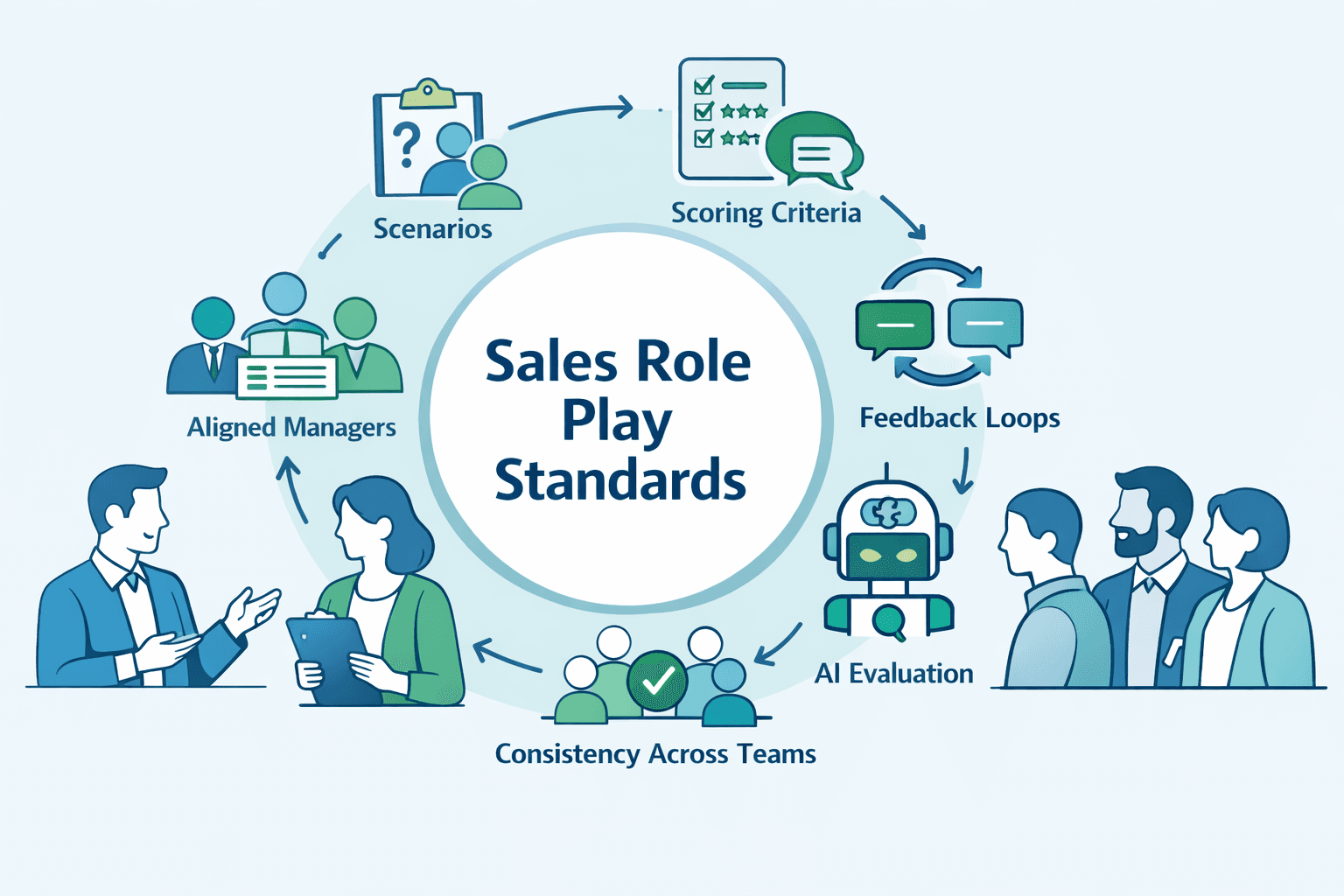
Role-playing is one of the most effective sales drills. Reps take turns acting as the salesperson and the customer, practicing common objections, negotiation scenarios, and closing techniques. To maximize effectiveness, managers should:
Rotate scenarios frequently to reflect evolving market conditions.
Record sessions for feedback and analysis.
Incorporate data-driven performance benchmarks for comparison.
2. Objection Handling Drills
Objection handling is a critical skill that can make or break a deal. In these drills, sales reps practice responding to the most common objections using structured frameworks. Key techniques include:
Categorizing objections (price, product fit, timing, authority).
Using scripting techniques for consistent messaging.
Reinforcing active listening skills to understand underlying concerns.
3. Cold Call and Prospecting Drills
Cold calling and prospecting remain foundational to sales success. Effective drills include timed exercises that simulate real-world prospecting pressures, including:
Crafting personalized outreach messages under time constraints.
Practicing follow-up sequences and voicemail scripts.
Tracking success rates to identify areas for improvement.
4. Product Knowledge Drills
Deep product knowledge ensures sales reps can confidently address technical questions and highlight unique value propositions. Techniques include:
Rapid-fire Q&A sessions about product features, benefits, and differentiators.
Scenario-based questions requiring reps to apply knowledge creatively.
Periodic assessments to track retention and proficiency.
5. Closing and Negotiation Drills
The ability to close deals effectively is often the differentiator between average and top-performing sales reps. These drills focus on:
Negotiation simulations using real-world pricing and contract scenarios.
Practicing urgency creation without appearing pushy.
Reinforcing post-close processes for long-term client satisfaction.
6. Analytics and Feedback Integration
A sales drill program without feedback is incomplete. Integrating performance data ensures drills are meaningful and targeted. Key practices include:
Using CRM data to identify patterns in performance gaps.
Conducting peer and manager reviews to highlight strengths and weaknesses.
Tracking improvement over time to validate the drill’s effectiveness.
7. Gamified Competitions
Gamification can transform mundane drills into engaging, high-energy exercises. Techniques include:
Leaderboards for metrics such as calls made, objections handled, or deals closed.
Reward systems that reinforce positive behaviors.
Team-based competitions to build collaboration and healthy rivalry.
Conclusion
Sales drills are far more than routine exercises; they represent a critical component of effective sales coaching training and a strategic tool that modern HR leaders and managers must leverage to optimize team performance. Unlike traditional training methods, sales drills are structured, targeted activities that focus on reinforcing key sales training subjects such as objection handling, prospecting, negotiation, and closing techniques. By systematically integrating sales drills into sales coaching training programs, organizations ensure that sales teams practice essential skills repeatedly, develop confidence in real-world scenarios, and build the muscle memory necessary to respond effectively under pressure.
When applied consistently and supported by data-driven insights, sales drills enhance team alignment, improve communication, and foster a cohesive approach to client interactions. Sales coaching training that emphasizes regular sales drills allows managers to monitor progress, identify individual strengths and weaknesses, and provide personalized guidance tailored to each team member’s skill level. This structured approach not only accelerates learning and skill retention but also reinforces critical sales training subjects across the team, ensuring that every representative is equipped to contribute meaningfully to organizational goals.
Investing in the right combination of sales drills and comprehensive sales coaching training cultivates a culture of excellence and accountability. Analytics and continuous feedback ensure that the impact of each drill is measurable, providing insights that guide future training strategies and help optimize performance. Modern sales teams thrive not solely on natural talent but on rigorous, practice-oriented, and results-driven sales coaching training programs that incorporate well-designed sales drills. By prioritizing these drills within broader sales training subjects, organizations can drive sustainable revenue growth, improve team cohesion, and prepare their workforce to adapt seamlessly to the challenges of today and the opportunities of tomorrow.
Click on Conversational AI for Sales: How It Works & Where It Helps Most
Frequently Asked Questions (FAQ)
1. What are sales drills, and why are they important?
Sales drills are structured, practice-oriented exercises designed to develop and reinforce key sales skills. Unlike traditional training, sales drills focus on real-world scenarios, helping sales representatives build confidence, improve problem-solving abilities, and internalize essential techniques. They are a critical component of sales coaching training and are especially effective when aligned with broader sales training subjects.
2. How do sales drills fit into sales coaching training programs?
Sales drills act as the practical implementation of sales coaching training. While sales coaching training provides guidance, frameworks, and theoretical knowledge, sales drills allow team members to practice these skills in controlled scenarios. This integration ensures that learning from sales training subjects is applied consistently, measurable, and retained effectively over time.
3. What types of sales drills are most effective?
Effective sales drills include role-playing exercises, objection-handling scenarios, prospecting and cold-call simulations, product knowledge quizzes, negotiation practice, and closing technique rehearsals. All of these drills can be integrated into a sales coaching training program to target specific sales training subjects and skill gaps.
4. How often should sales drills be conducted?
The frequency of sales drills depends on team size, experience level, and organizational goals. For optimal results, drills should be conducted regularly, such as weekly or bi-weekly, and integrated into broader sales coaching training programs. Consistency ensures continuous skill development and reinforces learning from sales training subjects.
5. Can sales drills be customized for individual team members?
Yes. One of the advantages of sales drills within sales coaching training is the ability to tailor exercises to individual skill levels, learning curves, and experience. Personalized drills ensure that each team member develops in areas where they need the most improvement, maximizing the effectiveness of sales training subjects.
References
Harvard Business Review – The Impact of Sales Coaching on Revenue Growth
https://hbr.org/2016/06/the-impact-of-sales-coaching-on-revenue-growthSales Management Association – Sales Training and Coaching Effectiveness
https://salesmanagement.org/resources/sales-training-and-coaching-effectiveness/Forbes – Why Sales Training Programs Fail and How to Fix Them
https://www.forbes.com/sites/forbestechcouncil/2021/01/27/why-sales-training-programs-fail-and-how-to-fix-themCSO Insights – Best Practices for Sales Enablement and Coaching
https://www.csoinsights.com/resources/best-practices-sales-enablement/Gartner – Improving Sales Performance Through Coaching
https://www.gartner.com/en/insights/sales-performanceLinkedIn Learning Blog – Sales Training Subjects That Actually Work
https://www.linkedin.com/learning/blog/sales-training-subjects-that-actually-workSalesforce Research – The ROI of Structured Sales Coaching
https://www.salesforce.com/research/roi-of-structured-sales-coaching
Learn more about


Try our AI Roleplay Bots for Free
Reduce Ramp-Up time by
47%
and double your sales productivity
Maxim Dsouza is the Chief Technology Officer at Eubrics, where he drives technology strategy and leads a 15‑person engineering team. Eubrics is an AI productivity and performance platform that empowers organizations to boost efficiency, measure impact, and accelerate growth. With 16 years of experience in engineering leadership, AI/ML, systems architecture, team building, and project management, Maxim has built and scaled high‑performing technology organizations across startups and Fortune‑100. From 2010 to 2016, he co‑founded and served as CTO of InoVVorX—an IoT‑automation startup—where he led a 40‑person engineering team. Between 2016 and 2022, he was Engineering Head at Apple for Strategic Data Solutions, overseeing a cross‑functional group of approximately 80–100 engineers.