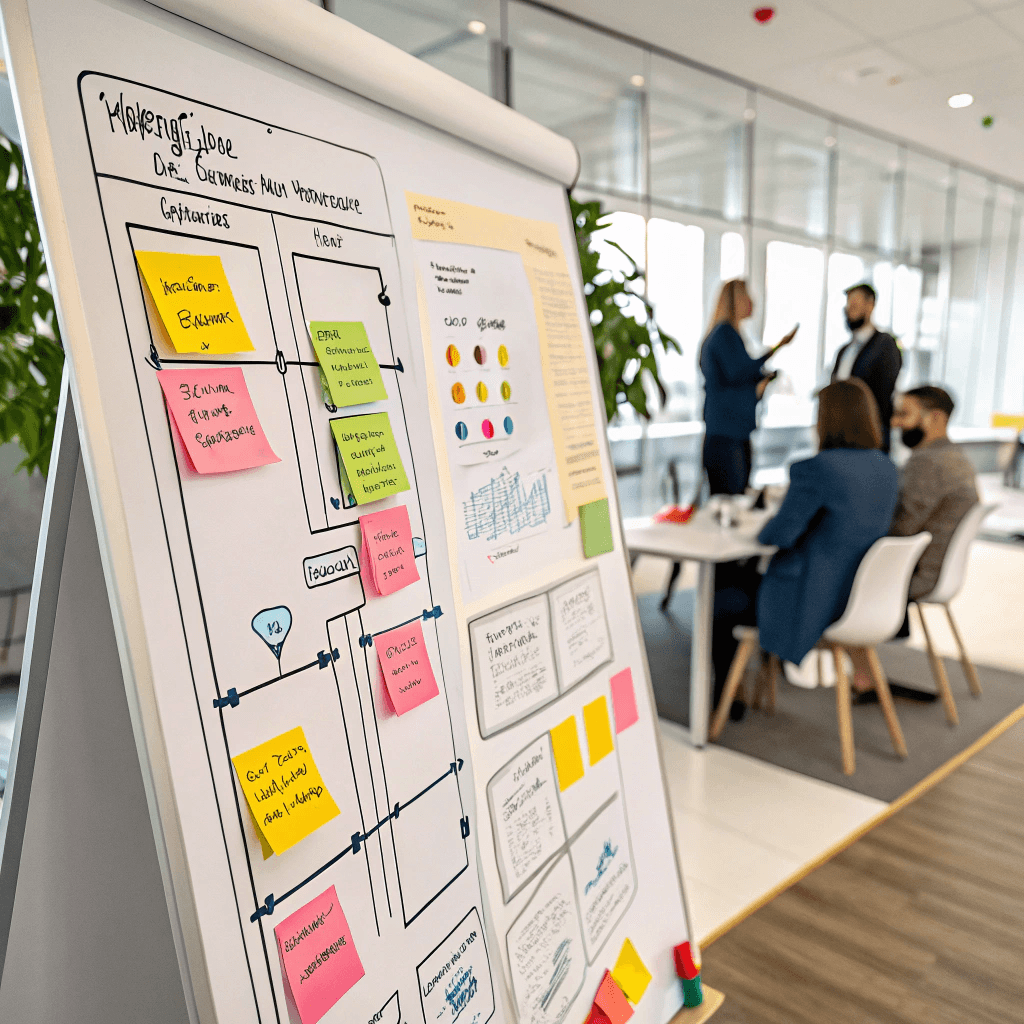
Sales Effectiveness

Nikita Jain

Introduction
Scaling a sales team beyond 20 representatives is a turning point for any organization. What worked when the team was small—informal coaching, shadowing top performers, and ad-hoc training—quickly breaks down as headcount grows. Without a structured sales training process, performance becomes inconsistent, onboarding slows, and sales managers spend more time firefighting than developing talent. At this stage, sales training must evolve from informal learning to a repeatable, scalable system.
When teams cross the 20-rep mark, complexity increases. New hires join more frequently, sales managers oversee larger groups, and messaging must remain consistent across regions and roles. A well-defined sales training process ensures every sales representative receives the same foundational knowledge, skill development, and performance expectations, regardless of when or where they join.
Why does sales training need to change after 20 reps?
Because informal knowledge sharing no longer scales. A structured process is required to maintain consistency, speed onboarding, and reduce performance gaps.
What are the biggest training challenges for growing sales teams?
Inconsistent onboarding, uneven skill development, lack of standard coaching, and over-reliance on top performers.
Should scaling teams focus more on training or enablement?
Both are important, but training must come first to build capability before enablement tools can be used effectively at scale.
How does structured sales training impact revenue?
It improves ramp-up time, increases consistency across reps, and reduces dependency on a few high performers.
Who owns the sales training process in scaling teams?
Ownership typically sits with sales leadership and enablement teams, with strong involvement from frontline managers.
A clear sales training process helps scaling teams move from reactive growth to predictable performance.
How to Create a Standardized Sales Training Framework for Scaling Teams
Once a sales team grows beyond 20 representatives, the most urgent priority is standardization. Without a clear and consistent training foundation, scaling creates fragmentation—different reps sell differently, managers coach inconsistently, and performance becomes unpredictable. A standardized sales training foundation ensures that every salesperson starts with the same expectations, skills, and understanding of how selling is done in the organization.
At this stage, training can no longer depend on tribal knowledge or shadowing top performers. While peer learning still matters, it must be supported by a structured framework that defines what “good selling” looks like. This foundation becomes the reference point for onboarding, coaching, and performance management as the team continues to grow.
Click on design scalable sales team training programs.
The first step is defining core sales competencies. These competencies outline the skills and behaviors every sales representative must demonstrate, regardless of territory or experience level. They create clarity for reps and alignment for managers.
Core sales competencies for scaling teams often include:
Discovery and qualification skills
Value articulation and messaging consistency
Objection handling and negotiation fundamentals
Pipeline management and forecasting discipline
Communication, follow-up, and professionalism
Once competencies are defined, training content must be mapped directly to them. This prevents random or redundant training and ensures every module supports a specific performance outcome. Training should progress logically, moving from foundational knowledge to applied skills.
A strong standardized training foundation typically includes:
A structured onboarding curriculum for new hires
Role-based learning paths aligned to sales responsibilities
Clear expectations for skill mastery at each stage
Practice-based learning such as simulations or role plays
Onboarding deserves special attention when scaling beyond 20 reps. Frequent hiring increases pressure on managers, and without structured onboarding, ramp-up times increase while performance quality drops. A standardized onboarding process ensures new reps become productive faster without overwhelming managers.
Effective onboarding at scale focuses on:
Product and market understanding
Sales process and qualification standards
Core messaging and value propositions
Early skill practice before live selling
Why is standardization critical when scaling sales teams?
Because consistency drives predictability. Standardization ensures all reps receive the same foundation, reducing performance gaps and confusion.
Does standardization limit flexibility for experienced reps?
No. Standardization sets the baseline. Experienced reps can still personalize their approach once core standards are met.
How detailed should a sales training framework be?
It should be clear enough to guide behavior without being rigid. The goal is alignment, not micromanagement.
Click on use AI sales training platforms to scale learning.
Another important element is manager alignment. Sales managers must be trained on the same framework so coaching reinforces training rather than contradicting it. When managers coach differently, training loses credibility.
Manager alignment includes:
Shared understanding of competencies
Common coaching language and expectations
Consistent evaluation of skill development
Reinforcement of training standards in reviews
Finally, standardized training should be documented and accessible. Scaling teams cannot rely on memory or informal explanations. Training materials, playbooks, and learning paths must be easy to find and regularly updated.
By building a standardized sales training foundation, organizations create stability during growth. This foundation supports faster onboarding, stronger coaching, and consistent execution—making it possible to scale beyond 20 reps without sacrificing quality or performance.
How to Scale Sales Training with Coaching and Sales Enablement
After establishing a standardized sales training foundation, the next challenge for teams scaling beyond 20 reps is reinforcement. Initial training alone is not enough to sustain performance as teams grow. Without ongoing reinforcement, sales reps gradually revert to old habits, apply skills inconsistently, or interpret training differently. This is where coaching and enablement work together to keep training alive and effective at scale.
Click on build a high-impact sales enablement program.
Coaching becomes the primary mechanism for reinforcing training in day-to-day selling. Sales managers play a critical role in translating training concepts into real behaviors. As teams expand, managers oversee more reps, making informal coaching insufficient. Coaching must follow a structured, repeatable approach aligned with the training framework.
Effective coaching reinforcement focuses on observing behavior, not just reviewing numbers. Managers should regularly review calls, meetings, and pipeline activity to assess how well reps are applying trained skills. This helps coaching conversations stay specific and actionable.
Key coaching practices for scaling teams include:
Regular one-on-one coaching sessions tied to training competencies
Observation of live or recorded sales interactions
Feedback linked directly to trained behaviors
Clear action plans for skill improvement
Follow-up to track progress over time
As team size increases, enablement becomes essential to support coaching consistency. Enablement ensures that reps and managers have access to the same content, tools, and guidance, reducing reliance on memory or individual interpretation.
Enablement reinforcement typically includes:
Centralized access to sales playbooks and training materials
Clear guidance on when and how to use content in the sales cycle
Templates and talk tracks aligned to training standards
Simple tools that support coaching and feedback
Why does reinforcement matter more as sales teams scale?
Because growth increases variation. Reinforcement ensures trained behaviors remain consistent across reps, managers, and regions.
Can coaching alone sustain training effectiveness at scale?
No. Coaching needs enablement support to remain consistent, especially when managers have larger teams and limited time.
How often should training be reinforced for scaling teams?
Reinforcement should be continuous. Short, frequent coaching moments and easy access to enablement resources work better than infrequent retraining.
Another important aspect of reinforcement is onboarding integration. New hires joining a scaling team must enter the same training and reinforcement cycle as existing reps. Without this alignment, performance gaps widen quickly.
Onboarding reinforcement strategies include:
Assigning new hires the same core training paths
Pairing training with early coaching sessions
Using enablement tools to guide first sales interactions
Reviewing early performance against training standards
Data also plays a growing role at scale. Tracking how training is applied across the team helps leaders identify gaps early and adjust reinforcement strategies before performance drops.
Useful reinforcement metrics include:
Adoption of trained sales behaviors
Consistency of process usage across reps
Coaching frequency and quality
Time-to-productivity for new hires
Finally, reinforcement should evolve as the organization grows. What worked at 20 reps may not work at 50 or 100. Regular reviews of training content, coaching practices, and enablement tools ensure reinforcement remains relevant and efficient.
Click on standardize training using sales drills.
By combining structured coaching with scalable enablement, organizations create a reinforcement system that sustains training impact as teams grow. This approach ensures sales training remains actionable, consistent, and performance-driven—no matter how large the sales organization becomes.
Measuring and Optimizing Sales Training Effectiveness for Large Sales Teams
As sales teams scale beyond 20 representatives, measuring training effectiveness becomes both more important and more complex. Informal feedback and anecdotal success stories are no longer enough. Leaders need clear evidence that training is improving performance, reducing ramp-up time, and supporting consistent execution across a growing team. Without measurement, sales training risks becoming an activity rather than a growth driver.
At scale, the purpose of measurement is not just evaluation but optimization. Data helps organizations understand what is working, what needs adjustment, and where reinforcement is required. The right metrics provide early warning signals before performance gaps become costly problems.
Effective measurement begins with alignment. Training metrics must be tied to clearly defined competencies, behaviors, and outcomes. If training goals are vague, measurement will be fragmented and misleading.
What does “training effectiveness” mean for scaling sales teams?
It means sales representatives are applying trained skills consistently, ramping faster, and performing more predictably as the team grows.
Which metrics best reflect sales training effectiveness at scale?
Behavior-based metrics, ramp-up indicators, and pipeline performance metrics together provide the clearest picture of training impact.
How often should training effectiveness be reviewed for large teams?
Behavior and activity metrics should be reviewed weekly or biweekly, while outcome metrics are best reviewed monthly or quarterly.
Once effectiveness is defined, organizations can focus on tracking the right indicators. Early indicators show whether training is being applied, while later indicators confirm business impact.
Key early-stage training effectiveness metrics include:
Time-to-productivity for new hires
Adoption of defined sales behaviors
Consistency in sales process usage
Completion and engagement with practice-based training
Coaching frequency aligned to training goals
These metrics reveal whether training is translating into day-to-day behavior change. When these indicators stagnate, it often signals issues with reinforcement rather than content quality.
As teams mature, outcome metrics become increasingly important. These metrics confirm whether improved behaviors are translating into results.
Key outcome-focused training metrics include:
Win rate consistency across the sales team
Improvement in pipeline conversion rates
Reduction in sales cycle length
Decreased performance gap between top and average reps
Revenue predictability over time
Measurement at scale also requires segmentation. Comparing performance across cohorts, regions, or tenure groups provides deeper insight than aggregate numbers alone.
Click on improve sales team performance at scale.
Useful segmentation approaches include:
New hires versus tenured reps
Trained versus recently onboarded groups
Team-level performance comparisons
Manager-level coaching effectiveness
Dashboards play a critical role in making metrics actionable. For scaling teams, dashboards must be simple, focused, and aligned to decision-making. Overloaded dashboards create confusion and slow response.
Effective dashboard practices include:
Clear linkage between training goals and KPIs
Trend views rather than single-point data
Benchmarks based on pre-training baselines
Visual cues highlighting improvement or decline
Optimization is the final step. Measurement without action does not improve performance. Training programs must evolve based on insights from data.
Optimization actions may include:
Updating training content based on observed gaps
Increasing coaching focus on weak behaviors
Simplifying enablement assets that are underused
Adjusting onboarding timelines and expectations
By continuously measuring and optimizing sales training effectiveness, organizations ensure that growth does not dilute performance quality. This disciplined, data-driven approach transforms sales training into a scalable system that supports predictable results—even as teams expand well beyond 20 representatives.
Conclusion
Scaling a sales team beyond 20 representatives requires a fundamental shift in how sales training is designed, delivered, and measured. Informal learning and ad-hoc coaching no longer scale effectively. A structured sales training process—supported by standardization, consistent coaching, enablement reinforcement, and data-driven measurement—ensures performance remains predictable as headcount grows. When training is reinforced through coaching and optimized using clear metrics, sales teams ramp faster, perform more consistently, and reduce reliance on individual top performers. A scalable training process transforms growth from a risk into a competitive advantage, enabling organizations to expand without sacrificing quality or results.
Frequently Asked Questions
1. Why does sales training need to change after a team exceeds 20 reps?
Because informal learning breaks down, creating inconsistency and slower onboarding as team size increases.
2. What is the biggest sales training challenge for scaling teams?
Maintaining consistency in skills, messaging, and performance across a growing number of reps.
3. How long should sales onboarding take for large teams?
It should be structured to shorten ramp-up time while ensuring skill mastery, typically 60–90 days.
4. Is coaching more important than training at scale?
Coaching reinforces training, but both are essential for sustained performance.
5. What role does sales enablement play in scaling training?
Enablement provides tools, content, and processes that support training application at scale.
6. How can managers support sales training at scale?
By coaching consistently, observing behavior, and reinforcing trained skills regularly.
7. Which metrics show sales training effectiveness?
Behavior adoption, ramp-up time, pipeline conversion, and win-rate consistency.
8. How often should sales training be updated?
Training should be reviewed quarterly and updated as sales strategies or markets change.
9. Can small teams use scalable training frameworks?
Yes. Starting early makes scaling smoother and reduces future rework.
10. Does structured sales training improve revenue predictability?
Yes. Consistent training improves execution, leading to more predictable results.
Learn more about


Try our AI Roleplay Bots for Free
Reduce Ramp-Up time by
47%
and double your sales productivity
Nikita Jain is a dynamic CEO and recognized leader passionate about harnessing technology and capability development to unlock the full potential of individuals and organizations. With over a decade of rich experience spanning enterprise learning, digital transformations, and strategic HR consulting at top firms like EY, PwC, and Korn Ferry, Nikita excels at driving significant, measurable success.