Sales Effectiveness

Maxim Dsouza

Introduction
As sales organizations grow, one of the biggest challenges leaders face is inconsistent sales coaching. Different managers coach differently, feedback varies by region, and reps receive mixed signals about what “good selling” actually looks like. This inconsistency slows skill development, creates uneven performance, and makes it difficult to scale best practices. AI-powered roleplay is emerging as a powerful solution to standardize sales coaching across the organization—without removing the human element.
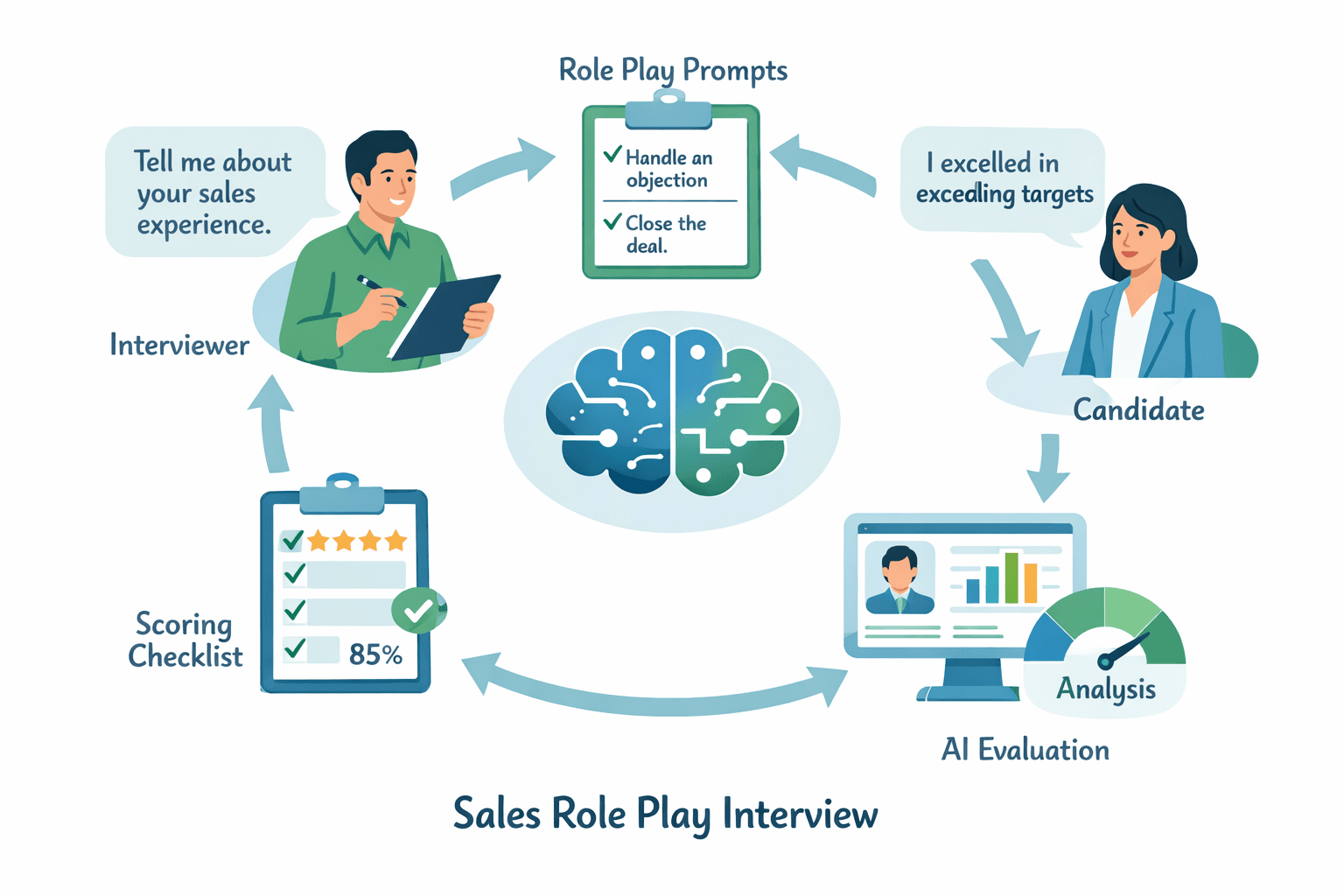
AI roleplay uses simulated, conversational scenarios to help sales reps practice real sales situations such as discovery calls, objection handling, negotiations, and closing conversations. Unlike traditional roleplays that depend on manager availability and coaching quality, AI roleplay provides consistent practice, objective feedback, and repeatable standards for everyone. This makes it especially valuable for large or distributed sales teams.
What is AI roleplay in sales coaching?
AI roleplay is a simulation-based training approach where sales reps practice conversations with an AI-driven buyer persona that responds dynamically based on the rep’s input.
Why is standardizing sales coaching so difficult at scale?
Because coaching depends heavily on individual managers’ skills, time, and experience, leading to inconsistent feedback and uneven development.
How does AI roleplay help standardize coaching?
It ensures every sales rep practices the same scenarios, is evaluated against the same criteria, and receives consistent feedback aligned with organizational standards.
Does AI roleplay replace sales managers?
No. AI roleplay supports managers by handling practice and baseline assessment, allowing managers to focus on higher-value coaching conversations.
Who benefits most from AI roleplay?
New hires, scaling sales teams, distributed organizations, and companies seeking consistent execution across regions benefit the most.
By using AI roleplay, organizations can turn sales coaching from a manager-dependent activity into a scalable, standardized system.
Click on use AI roleplay tools for consistent sales coaching.
How AI Roleplay Standardizes Sales Coaching at Scale
As sales teams grow across regions, time zones, and experience levels, maintaining consistent sales coaching becomes increasingly difficult. Traditional coaching depends heavily on individual managers—how they roleplay, what feedback they give, and how often they coach. AI roleplay changes this dynamic by introducing a repeatable, objective, and scalable coaching layer that operates consistently across the organization.
Click on apply AI-powered coaching to sales teams.
AI roleplay works by simulating realistic buyer conversations. Sales reps engage with an AI-driven persona that reacts dynamically based on tone, intent, questioning style, and objection handling. These simulations are designed around the organization’s sales methodology, messaging, and deal scenarios, ensuring every rep practices against the same standards.
One of the biggest advantages of AI roleplay is that it removes variability from practice. Every rep faces the same scenarios, difficulty levels, and evaluation criteria. This creates a shared definition of what “good” looks like in sales conversations, regardless of manager or geography.
Core ways AI roleplay standardizes sales coaching include:
Delivering identical practice scenarios to all reps
Evaluating performance against predefined competencies
Providing instant, objective feedback after every roleplay
Enabling unlimited practice without manager availability
Creating consistent benchmarks across teams
Unlike traditional roleplay, AI does not get tired, rushed, or biased. Reps can practice repeatedly, refine their approach, and build confidence before entering real customer conversations. This is especially valuable for objection handling, discovery questioning, and complex deal scenarios where repetition matters.
Why does AI roleplay improve coaching consistency more than manager-led roleplay?
Because AI evaluates every rep using the same criteria, eliminating differences caused by individual coaching styles or experience levels.
Is AI roleplay only useful for new hires?
No. While new hires benefit significantly, experienced reps also use AI roleplay to refine messaging, test new pitches, and prepare for complex deals.
Does AI roleplay reduce the role of sales managers?
No. It enhances manager effectiveness by handling practice and baseline assessment, freeing managers to focus on strategic coaching.
A strong example of AI roleplay in action is Eubrics. Eubrics uses AI-powered roleplay to help organizations standardize sales coaching while still aligning with their unique sales processes and messaging. The platform enables sales reps to practice realistic conversations across multiple scenarios such as discovery calls, objection handling, and negotiation discussions.
Click on standardize coaching using AI sales roleplay exercises.
What differentiates Eubrics is its focus on structured skill development and coaching alignment. AI roleplays are mapped to specific sales competencies, allowing organizations to define what skills matter most and ensure consistent practice across teams. Reps receive immediate feedback on areas such as questioning quality, value articulation, objection handling, and conversational flow.
Key capabilities of Eubrics’ AI roleplay approach include:
Customizable sales scenarios aligned to company messaging
Competency-based scoring and feedback
Roleplay simulations for different buyer personas
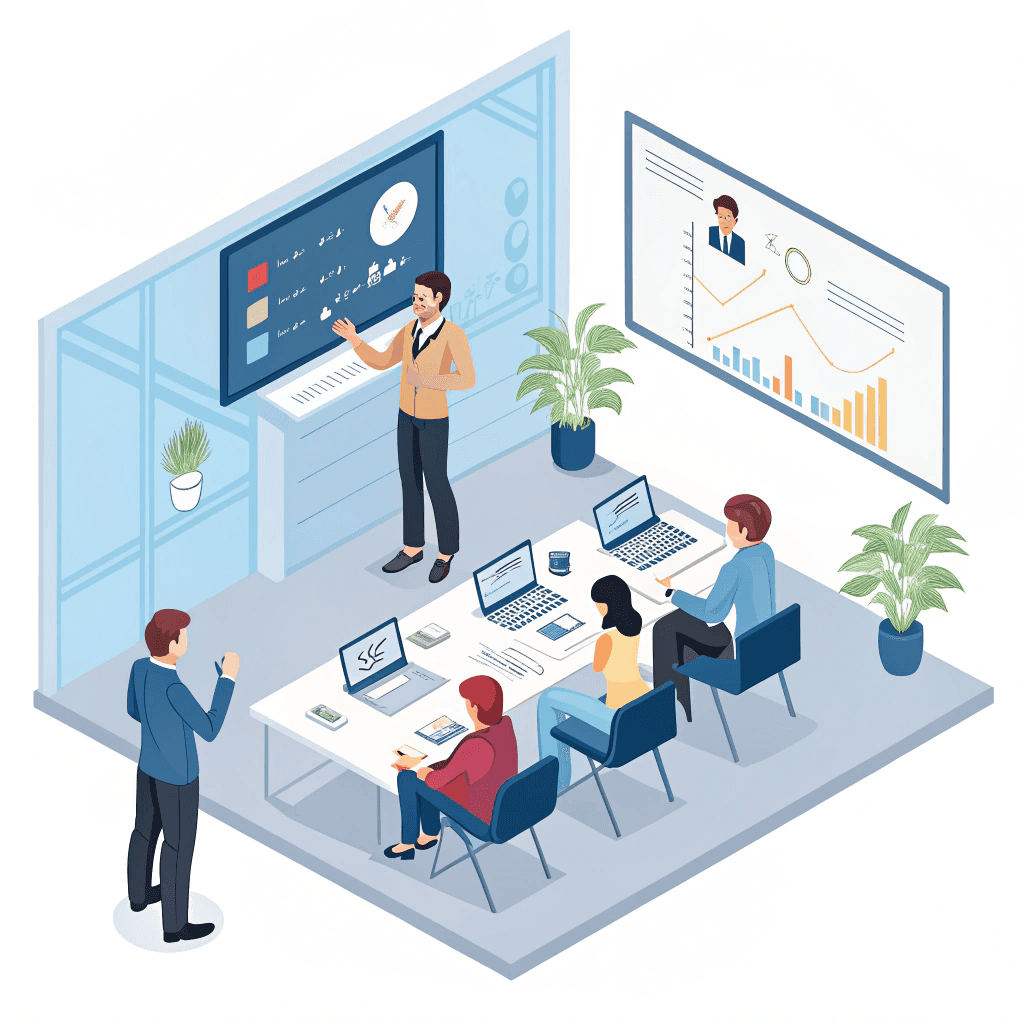
Performance insights for managers and leaders
Scalable coaching for distributed sales teams
By integrating AI roleplay into the sales coaching process, organizations using Eubrics are able to reduce dependency on ad-hoc roleplays and ensure every rep receives the same quality of practice and feedback. Managers gain visibility into skill gaps across the team, making coaching more focused and data-driven.
AI roleplay also supports continuous improvement. As products, markets, or messaging evolve, scenarios can be updated quickly, ensuring coaching stays relevant without retraining managers on new roleplay methods.
In large or fast-growing sales organizations, AI roleplay transforms coaching from an inconsistent, manager-dependent activity into a standardized, scalable system. When combined with human coaching, platforms like Eubrics help organizations build confident, capable sales teams that perform consistently—no matter how large the organization becomes.
How to Implement AI Roleplay Across Teams for Measurable Sales Impact
After understanding how AI roleplay standardizes sales coaching, the next critical step is implementation at the organizational level. The success of AI roleplay does not depend only on technology, but on how well it is embedded into existing sales coaching workflows. When implemented correctly, AI roleplay becomes a natural part of how sales teams learn, practice, and improve—rather than a one-time training initiative.
Implementation begins with alignment. Sales leadership must clearly define the behaviors, skills, and outcomes that coaching should reinforce. AI roleplay scenarios should mirror real sales situations faced by reps, not generic conversations. This ensures relevance and immediate applicability in the field.
Click on enable conversational AI in sales coaching.
AI roleplay is most effective when it is positioned as a practice and preparation layer, not an evaluation tool alone. Reps should feel safe experimenting, failing, and improving without fear of judgment. This mindset significantly increases adoption and engagement.
Where should AI roleplay fit in the sales coaching process?
It should sit between formal training and live selling, acting as a practice bridge that reinforces skills before real customer conversations.
How frequently should sales reps use AI roleplay?
Short, frequent practice sessions work best. Weekly or biweekly roleplay sessions drive better retention than occasional intensive use.
Should AI roleplay be mandatory or optional?
For core skills and onboarding, mandatory usage ensures consistency. For advanced scenarios, optional use encourages self-driven improvement.
Once positioning is clear, organizations should roll out AI roleplay in structured phases rather than all at once.
A phased implementation approach typically includes:
Pilot rollout with a small group or region
Feedback collection from reps and managers
Refinement of scenarios and scoring criteria
Gradual expansion to the full sales organization
Manager involvement is essential during implementation. AI roleplay does not replace managers—it amplifies their effectiveness. Managers should review AI-generated insights to guide coaching conversations, not to micromanage reps.
Manager-aligned implementation includes:
Reviewing roleplay scores and feedback before coaching sessions
Using AI insights to identify common skill gaps
Reinforcing AI feedback during one-on-one coaching
Tracking improvement trends over time
Platforms such as Eubrics support this structured approach by linking AI roleplay outcomes directly to defined sales competencies. This allows organizations to maintain a single coaching language across training, practice, and manager feedback. Sales leaders gain visibility into where teams struggle most—whether it’s discovery depth, objection handling, or value articulation—making coaching more targeted and effective.
Another important factor is integration with existing sales workflows. AI roleplay adoption increases when it aligns with current training schedules, onboarding milestones, and sales methodologies.
Click on use AI coaching to improve 1:1 sales conversations.
Effective integration practices include:
Embedding roleplay into onboarding checklists
Linking scenarios to active sales campaigns
Using AI roleplay before product launches or messaging changes
Aligning roleplay scoring with coaching frameworks
Measurement plays a key role in long-term success. Organizations should track not just usage, but improvement over time. AI roleplay provides rich data that reveals whether reps are progressing, plateauing, or struggling.
Useful impact indicators include:
Improvement in roleplay scores over time
Reduction in common objection-handling gaps
Faster onboarding ramp-up
Increased coaching efficiency for managers
Finally, continuous optimization is essential. As products, markets, and buyer behavior evolve, AI roleplay scenarios must evolve as well. Regular reviews ensure simulations remain realistic and aligned with business priorities.
By implementing AI roleplay through a structured, phased, and manager-aligned approach, organizations can standardize sales coaching without sacrificing flexibility or human judgment. When embedded into daily workflows, AI roleplay becomes a scalable engine for consistent skill development—helping sales teams perform confidently and consistently across the entire organization.
Conclusion
AI roleplay is transforming how organizations standardize sales coaching across large and distributed teams. By removing dependence on individual manager styles and availability, AI roleplay creates a consistent, repeatable coaching experience that scales effortlessly. It allows sales reps to practice real-world conversations, receive objective feedback, and improve continuously—without waiting for scheduled roleplays or subjective evaluations. When embedded into onboarding, ongoing training, and manager-led coaching, AI roleplay strengthens skill adoption, accelerates ramp-up time, and improves overall sales performance. For organizations focused on consistency, scalability, and measurable improvement, AI roleplay is no longer optional—it is a strategic advantage in modern sales coaching.
Frequently Asked Questions
1. What is AI roleplay in sales coaching?
AI roleplay uses simulated buyer conversations powered by artificial intelligence to help sales reps practice and improve selling skills consistently.
2. How does AI roleplay standardize sales coaching?
It provides identical scenarios, evaluation criteria, and feedback to every rep, ensuring consistent coaching standards across the organization.
3. Can AI roleplay replace sales managers?
No. AI roleplay supports managers by handling practice and assessment, allowing managers to focus on strategic coaching.
4. Is AI roleplay suitable for large sales teams?
Yes. It is especially effective for large or distributed teams where traditional coaching is difficult to scale.
5. How often should sales reps use AI roleplay?
Short, regular sessions—weekly or biweekly—deliver the best results.
6. Does AI roleplay help experienced sales reps?
Yes. It helps refine messaging, prepare for complex deals, and adapt to new sales strategies.
7. How does AI roleplay improve onboarding?
It allows new hires to practice safely, build confidence, and reduce time-to-productivity.
8. Can AI roleplay be customized to company messaging?
Yes. Scenarios can be tailored to products, buyer personas, and sales methodologies.
9. How is AI roleplay performance measured?
Through competency-based scoring, behavioral analysis, and improvement trends over time.
10. Why is AI roleplay important for future-ready sales teams?
Because it delivers scalable, consistent coaching while adapting quickly to changing markets and products.
Learn more about


Try our AI Roleplay Bots for Free
Reduce Ramp-Up time by
47%
and double your sales productivity
Maxim Dsouza is the Chief Technology Officer at Eubrics, where he drives technology strategy and leads a 15‑person engineering team. Eubrics is an AI productivity and performance platform that empowers organizations to boost efficiency, measure impact, and accelerate growth. With 16 years of experience in engineering leadership, AI/ML, systems architecture, team building, and project management, Maxim has built and scaled high‑performing technology organizations across startups and Fortune‑100. From 2010 to 2016, he co‑founded and served as CTO of InoVVorX—an IoT‑automation startup—where he led a 40‑person engineering team. Between 2016 and 2022, he was Engineering Head at Apple for Strategic Data Solutions, overseeing a cross‑functional group of approximately 80–100 engineers.