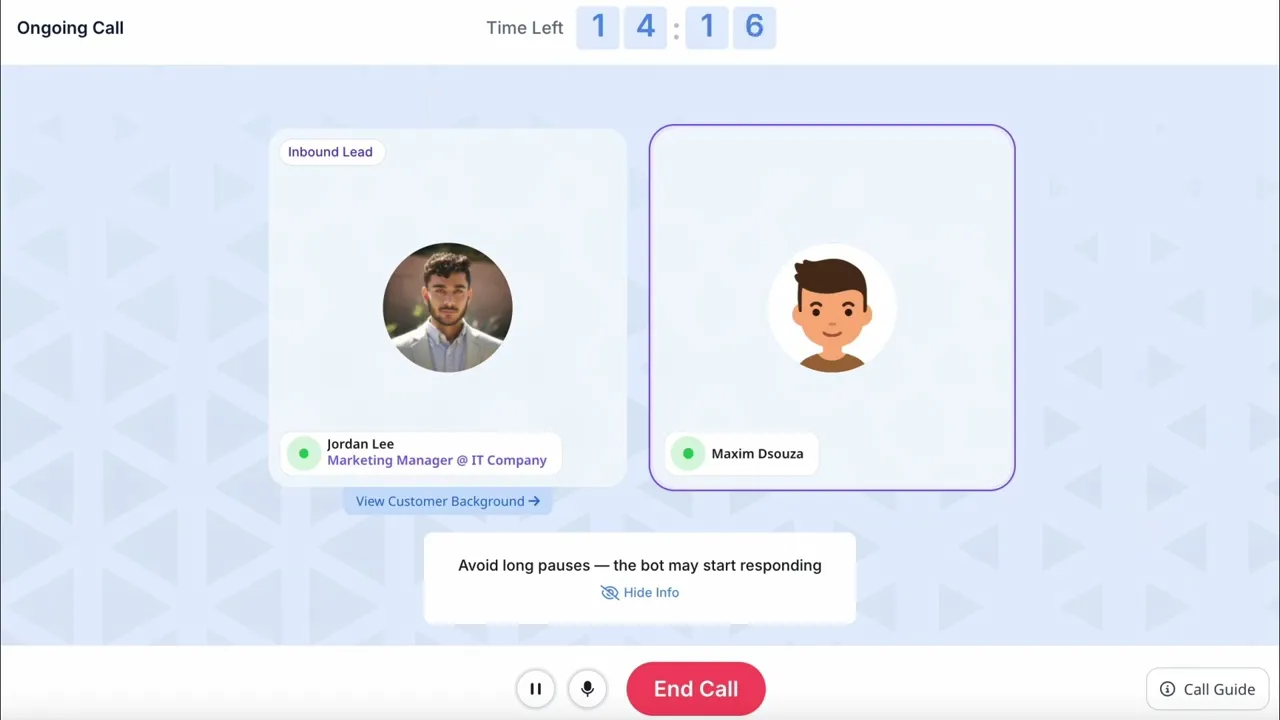
AI sales coaching introduces a new approach by enabling sales teams to practice conversations, receive instant feedback, and improve through repeated simulations.
Understanding the difference between traditional coaching and AI-powered coaching helps organizations choose the most effective way to develop sales skills.
Traditional Sales Coaching: How It Works
Traditional coaching typically happens through direct guidance from managers or enablement leaders.
Common coaching activities include:
reviewing recorded sales calls
one-on-one coaching sessions
roleplay exercises during workshops
feedback after customer meetings
While these methods can be effective, they often depend heavily on manager availability and time.
As sales teams grow, it becomes difficult to provide consistent coaching for every rep.
What Is AI Sales Coaching?
AI sales coaching uses artificial intelligence to simulate customer conversations and analyze how sales reps communicate.
Instead of waiting for scheduled coaching sessions, sales professionals can practice conversations anytime and receive instant feedback.
AI coaching platforms typically provide insights on:
communication clarity
questioning techniques
objection handling
value articulation
missed opportunities in conversations
This allows sales teams to continuously practice and improve key selling skills.
AI Sales Coaching vs Traditional Coaching
Traditional coaching is valuable because experienced managers can provide real-world guidance.
AI coaching complements this by enabling frequent practice and consistent feedback.
Many organizations now combine AI practice simulations with human coaching.
Eubrics
Comprehensive Skill Gap Analysis
Customized Learnings Paths
Interactive and Gamified Learning
Real-Time Progress Tracking
Integration with Daily Workflow
Actionable Insights for Managers
Boost Employee Performance
Increase Engagement and Retention
Streamline Training Processes
Archive Organizational Goals
Example: AI Coaching in Practice
The rep can repeat the scenario to refine their approach before speaking with real customers.
When AI Sales Coaching Is Most Valuable
AI coaching is particularly helpful for organizations that need to scale training across teams.
Onboarding New Sales Reps
New hires can practice real customer conversations before engaging with prospects.
Improving Objection Handling
Sales teams can simulate challenging customer scenarios and refine responses.
Scaling Coaching Across Teams
AI enables consistent training across large or distributed sales organizations.
Reinforcing Sales Training
AI roleplays help sales reps apply concepts learned in training programs.
Why Many Sales Teams Combine AI and Human Coaching
AI coaching and manager coaching serve different purposes.
AI coaching provides
scalable practice
instant feedback
structured skill development
Human coaching provides
strategic guidance
deal-level insights
mentorship and experience
Together, they create a continuous learning environment where sales reps can practice frequently while still benefiting from expert guidance.
See how leading sales teams are using AI roleplays to improve training, reduce ramp time, and prepare reps for real customer conversations.

Everything you need to know about the product and more.
How do AI sales roleplays work on the Eubrics platform?
Sales reps interact with AI-generated customer personas that simulate real buyers, objections, and sales scenarios. These conversations feel like real calls, allowing reps to practice discovery, objection handling, and closing in a realistic and repeatable environment.
How does Eubrics customize training for our sales team?
Eubrics allows you to configure customer personas, industry scenarios, ICPs, and sales workflows specific to your organization. The platform adapts roleplays and evaluations to mirror your real sales conversations and processes.
What insights and analytics does the platform provide?
Eubrics provides real-time insights into rep performance, skill gaps, strengths, and readiness levels. Leaders can track improvement across teams, identify coaching opportunities, and measure the impact of training.
Can Eubrics integrate with our existing tools?
Yes. Eubrics integrates with major CRM, HRMS/HRIS, and ATS systems, making it easy to connect training data with your existing workflows.
Does Eubrics replace sales managers or trainers?
No. Eubrics augments sales leaders by providing scalable practice, feedback, and performance insights, allowing managers to focus on targeted coaching and strategic development.
How quickly can we see results?
Most teams begin seeing improvements in sales readiness, confidence, and call quality within the first few weeks as reps consistently practice and receive feedback.
What industries does Eubrics support?
Eubrics supports a wide range of industries including B2B SaaS, banking, insurance, financial services, and contact centers. Roleplays can be tailored to any sales motion or industry context.
How secure is our data on the platform?
Eubrics uses enterprise-grade security with encrypted data storage and complies with industry standards including ISO 27001 and SOC 2, ensuring your training data remains protected.
How long does it take to implement Eubrics?
Most teams can get started within a few days. Our team helps configure roleplays, evaluation metrics, and scenarios tailored to your sales environment.
Can we create our own evaluation metrics and scorecards?
Yes. Eubrics allows organizations to define custom competency frameworks and scorecards aligned with their sales methodology and coaching goals.
Is Eubrics suitable for onboarding new sales hires?
Yes. Eubrics is widely used for onboarding, enabling new hires to practice real sales conversations and build confidence before engaging with actual customers.
How is Eubrics different from traditional sales training?
Traditional training focuses on theory and one-time workshops, while Eubrics provides continuous practice, AI-driven feedback, and measurable readiness insights to ensure skills translate into real performance.