Sales training has traditionally relied on workshops, recorded lessons, and occasional coaching sessions. While these methods help build foundational knowledge, they often struggle to prepare sales professionals for the complexity of real customer conversations.
AI sales training introduces a more interactive and scalable approach to skill development. By simulating realistic customer interactions and providing instant feedback, AI-powered training platforms allow sales teams to practice critical conversations, refine their approach, and continuously improve performance.
For many organizations, AI is becoming a key tool for making sales training more practical, measurable, and scalable.
The Challenges of Traditional Sales Training
Many organizations invest heavily in sales training programs, yet sales leaders often struggle to see consistent improvement in conversation quality and performance.
One reason is that traditional training methods focus heavily on knowledge transfer rather than skill development.
Sales professionals may attend workshops, watch training videos, or review playbooks, but they often have limited opportunities to actually practice the skills required in real customer interactions.
Several common challenges emerge in traditional training environments.
Limited Practice Opportunities
Sales reps typically participate in only a few structured roleplays during onboarding or training sessions. Without regular practice, it can be difficult for reps to develop confidence and refine their communication skills.
Inconsistent Coaching
Coaching quality often depends on the availability and experience of individual managers. Some reps receive frequent feedback, while others may go long periods without structured coaching.
Slow Feedback Cycles
In many teams, feedback is provided days or even weeks after a customer interaction. This delay makes it harder for sales reps to connect feedback with the conversation that needs improvement.
Difficulty Scaling Training
As organizations grow, maintaining consistent training across regions, teams, and managers becomes increasingly challenging.
These limitations are one of the main reasons companies are exploring AI-powered sales training solutions.
What Is AI Sales Training?
AI sales training uses artificial intelligence to simulate realistic customer conversations, analyze interactions, and provide structured feedback to sales professionals.
Instead of relying only on static training materials, AI platforms allow sales reps to actively practice conversations in simulated environments.
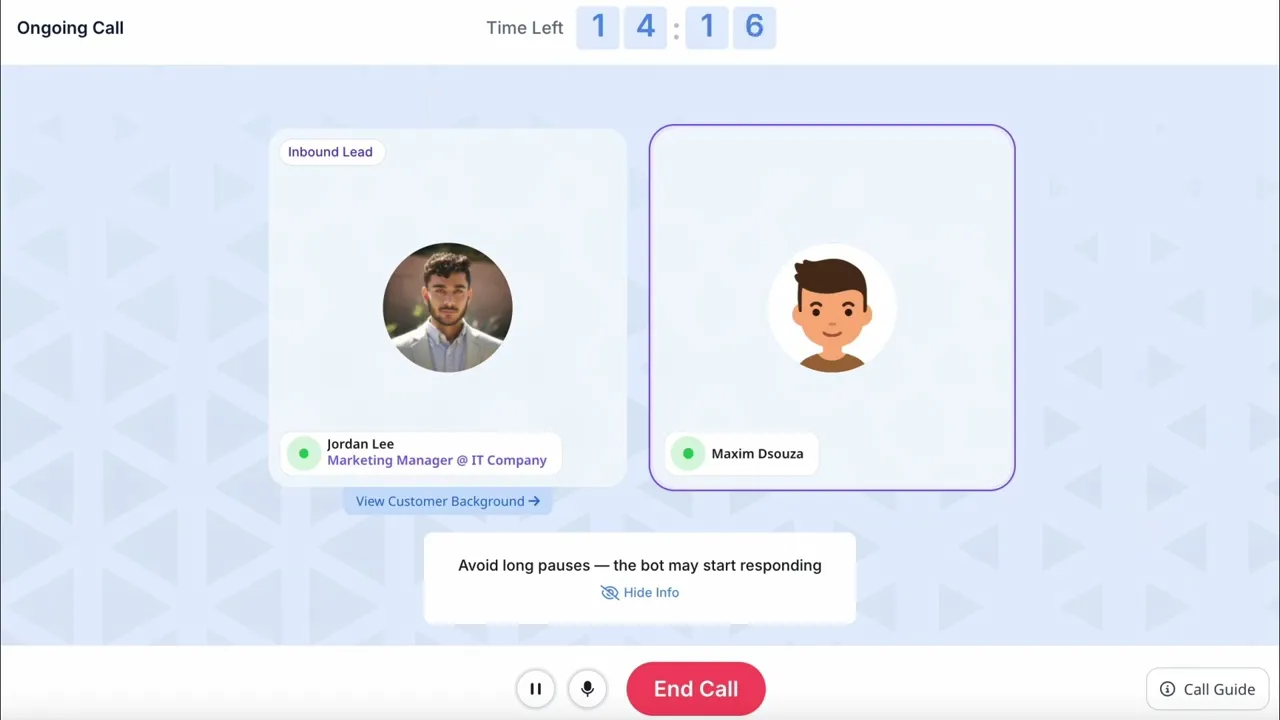
For example, sales professionals can interact with AI-generated customers that behave like real prospects — asking questions, raising objections, or requesting clarification about a product or service.
The system then analyzes the interaction and provides feedback on elements such as:
communication clarity
objection handling
questioning techniques
missed opportunities in the conversation ( demonstrate the pointers in some visual way)
This approach helps transform sales training from passive learning into active skill development.
How AI Sales Training Works
AI-powered training platforms create a continuous learning loop where sales reps can practice conversations, receive feedback, and improve through repetition.
A typical training workflow includes several steps:
1. Define the Training Scenario
Sales teams configure the scenario they want to practice, including the industry, customer profile, and sales situation.
2. AI Generates a Simulated Customer
Based on this information, the system creates an AI-powered customer persona that behaves like a real buyer.
3. Sales Rep Practices the Conversation
The sales rep interacts with the AI customer, practicing discovery questions, product explanations, or objection handling.
4. AI Analyzes the Interaction
The platform evaluates the conversation and highlights strengths, weaknesses, and missed opportunities.
5. Targeted Feedback and Improvement
Sales reps receive guidance on how to improve and can repeat the scenario to refine their approach.
This structured practice loop allows sales professionals to develop skills through repetition and feedback, similar to how athletes improve through continuous training.
Example of AI Sales Training in Practice
To understand how AI sales training works in a real scenario, consider a sales representative preparing to handle pricing objections.
The rep enters a training scenario focused on a customer evaluating different solutions. The AI-generated customer raises a common concern:
"Your solution seems more expensive than other options we’re considering."
The sales rep responds by acknowledging the concern and attempting to explain the value of the solution.
After the conversation, the AI training system analyzes the interaction and provides feedback such as:
whether the rep acknowledged the objection effectively
how clearly the value proposition was explained
opportunities to ask stronger discovery questions
moments where the conversation could have been improved
The rep can then repeat the scenario, refine their responses, and build confidence in handling similar objections with real customers.
Over time, repeated simulations help sales professionals develop stronger conversation skills and more effective selling techniques.
Check out how our AI Sales Roleplay Bots have transformed sales enablement for 25+ enterprises
Benefits of AI Sales Training for Sales Teams
Organizations are increasingly adopting AI-powered training because it addresses many of the limitations of traditional learning methods.
More Opportunities for Practice
AI platforms allow sales reps to practice conversations anytime, enabling significantly more repetition than traditional workshop-based training.
This helps reinforce key skills such as objection handling, discovery questioning, and value communication.
Faster Ramp Time for New Hires
New sales hires often take months to become confident in customer conversations. AI training enables them to practice realistic scenarios early in the onboarding process, helping them build communication skills faster.
Consistent Training Across Teams
AI-powered training ensures that all sales reps experience the same scenarios, messaging frameworks, and feedback standards, making it easier to maintain consistency across teams.
Data-Driven Coaching
AI systems can analyze conversations and surface insights that help managers identify skill gaps and provide more targeted coaching.
This allows organizations to make training decisions based on real performance data rather than intuition alone.
See how leading sales teams are using AI roleplays to improve training, reduce ramp time, and prepare reps for real customer conversations.

Everything you need to know about the product and more.
What role do sales trainers play once AI sales training is in place?
Trainers set the standard that AI sales training works to. They write the buyer types reps practice against, the situations that matter most, and the scorecard that defines a good call. The AI then delivers the practice and the first round of feedback, as often as each rep needs it. That leaves trainers more time to coach the specific gaps the scores reveal, instead of playing the customer in every session.
What skills can AI sales training cover?
It can cover any behavior you can describe on a scorecard. Common areas include call opening, needs discovery, value framing, objection handling and agreeing next steps. You can also score skills measured across the whole call, such as listening and tone, and mandatory steps such as a required disclosure. Each skill gets its own score and written feedback after every call.
How do you measure whether AI sales training is working?
Start and end each training plan with a scored roleplay on the same skills. The first call sets a baseline for every rep, and the final call shows how far they moved. In between, every practice call is scored against the same scorecard, so you can follow progress area by area and compare reps fairly. Practice calls that are not scored are kept out of these figures.
How is AI sales training different from an online sales course?
An online course teaches what to say, and AI sales training lets reps practice saying it in a live conversation. Eubrics combines both in one development plan. A plan can include learning modules and knowledge tests alongside AI roleplay calls, in the order you choose, so reps learn a concept and then practice it with an AI customer straight afterward.
Which sales teams benefit most from AI sales training?
It helps most where practice is hard to provide in person. That includes teams with regular intakes of new hires, teams spread across many locations, and teams whose products or messaging change often. It also suits teams in regulated industries, where every rep has to cover the same mandatory steps, because each step can be checked on every practice call.