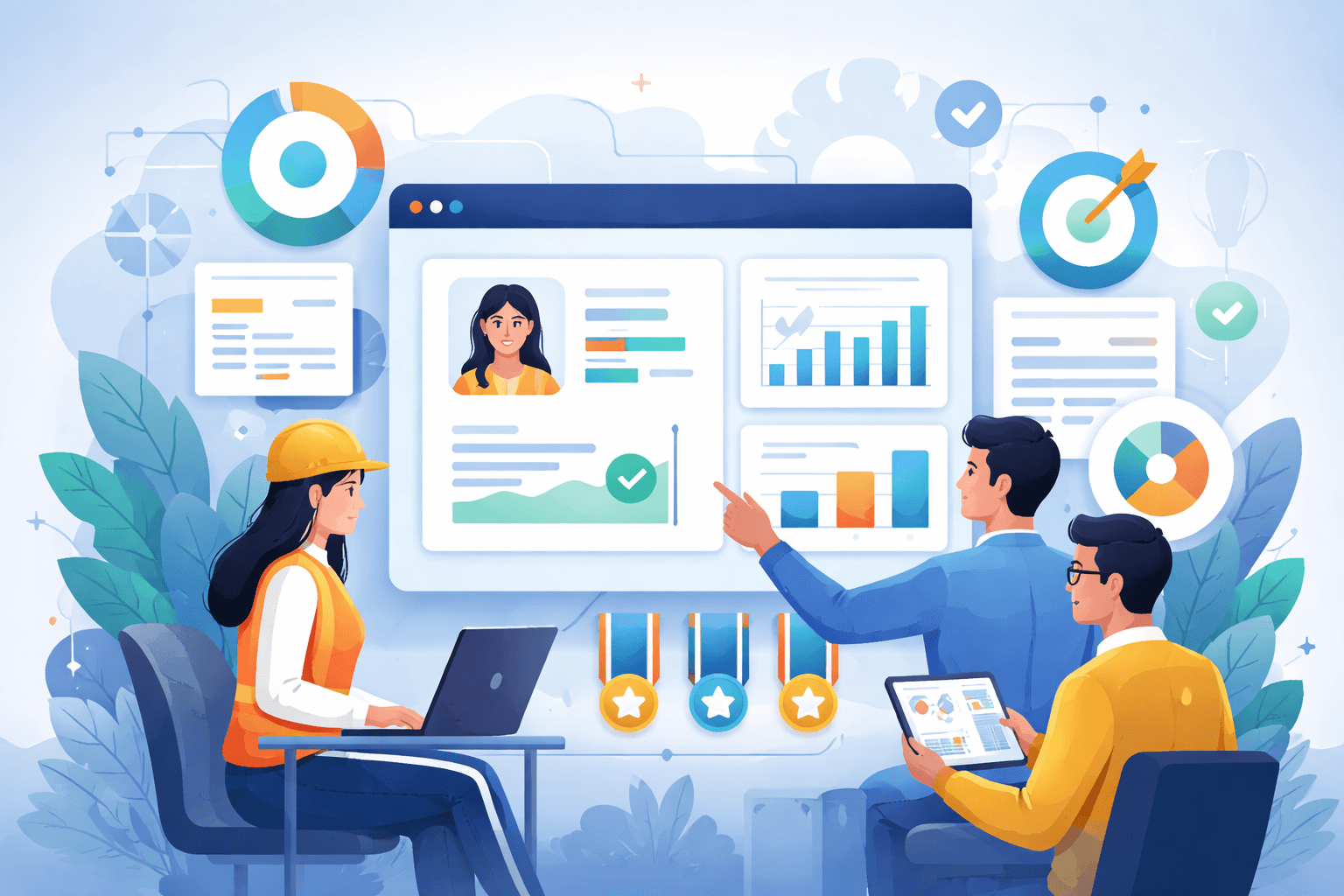
Discover how a leading Manufacturing & Energy enterprise achieved 100% activation and 83.2% skill accuracy using a diagnostic-led role readiness framework with assessments, analytics, and structured Individual Development Plans.
Driving Capability Through Assessments & Individual Development Plans
A leading manufacturing and energy enterprise partnered with Eubrics to strengthen role readiness and behavioural capability across its workforce. As the organization scaled, leadership recognized the need to move beyond perception-based evaluation methods and introduce a structured, measurable system for assessing behavioural fitment and development gaps.
Traditional evaluation methods relied heavily on manual reviews and manager-driven assessments. While useful, they lacked standardization, visibility into measurable skill gaps, and a direct bridge between diagnostic insights and actionable development.
The organization wanted a scalable system that could identify behavioural gaps, align employees to role expectations, and translate insights into structured Individual Development Plans.
To address this, the company implemented a diagnostic-led capability development model combining assessments, analytics, gamified reinforcement, and structured IDPs.
The initiative focused on creating measurable role readiness while ensuring structured development across the organization.
The company aimed to:
Improve visibility into behavioural fitment across roles
Standardize assessments with measurable analytics
Convert assessment insights into structured Individual Development Plans
Ensure sustained participation through structured engagement mechanisms
At the same time, leadership wanted clear data on skill accuracy, participation, and reinforcement effectiveness instead of relying on subjective feedback.
To shift from perception-based evaluations to measurable role readiness, the organization introduced a structured capability model through the Eubrics platform.
Assessment-First Capability Model
Employees completed role-based behavioural assessments designed to identify competency gaps aligned with specific role expectations. This created a standardized baseline for evaluation.
Role Fitment Analytics
A centralized dashboard provided visibility into role fitment, strengths, behavioural gaps, and overall cohort performance. Leaders could now track measurable readiness rather than relying on managerial perception.
Individual Development Plans That Translate Insights into Action
Each participant received a personalized Individual Development Plan aligned to identified competency gaps. This ensured that diagnostic insights directly informed structured development pathways.
Gamified Reinforcement to Sustain Participation
XP leaderboards, medals, and structured recognition mechanisms maintained momentum and ensured full participation across the cohort.
Together, these elements created a scalable capability ecosystem where assessment, analytics, and development were tightly integrated.
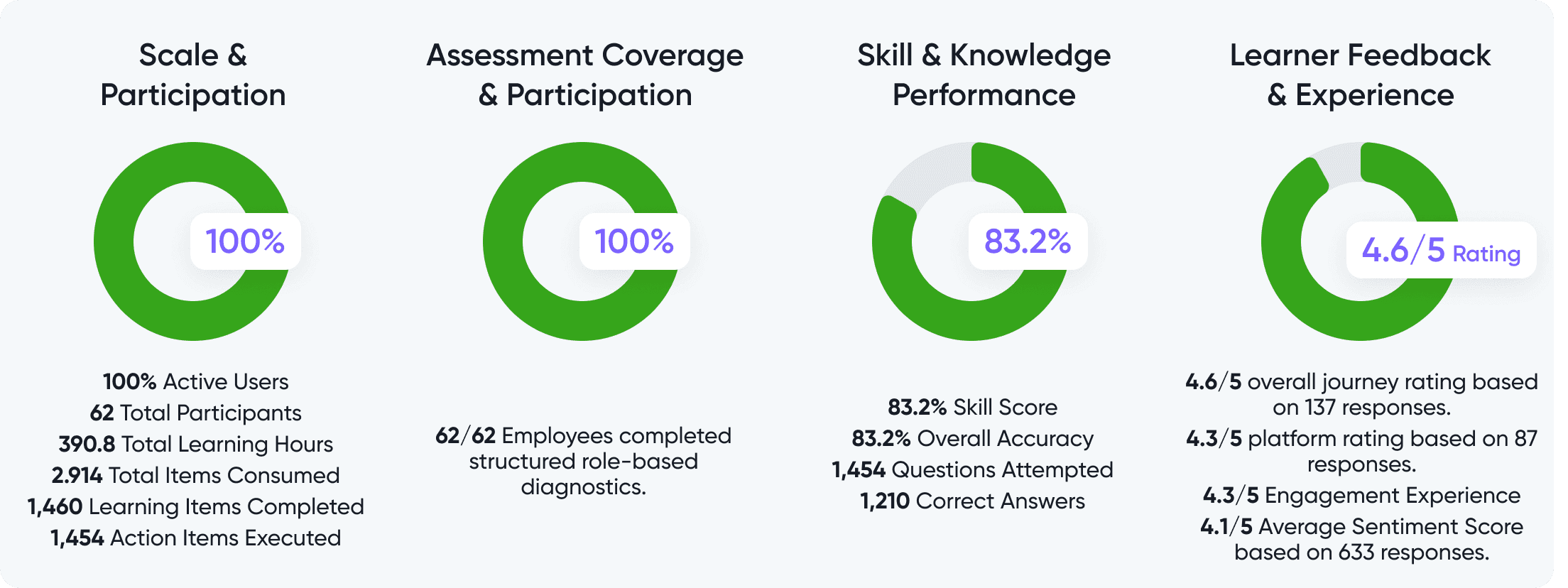
Assessment Coverage & Participation
The initiative achieved full diagnostic coverage across the cohort. Participation remained consistent, with full activation across all employees and continued engagement through structured development journeys.
Skill & Knowledge Performance
The data demonstrated measurable understanding of behavioural competencies and quantified reinforcement effectiveness through structured assessments.
Learner Experience
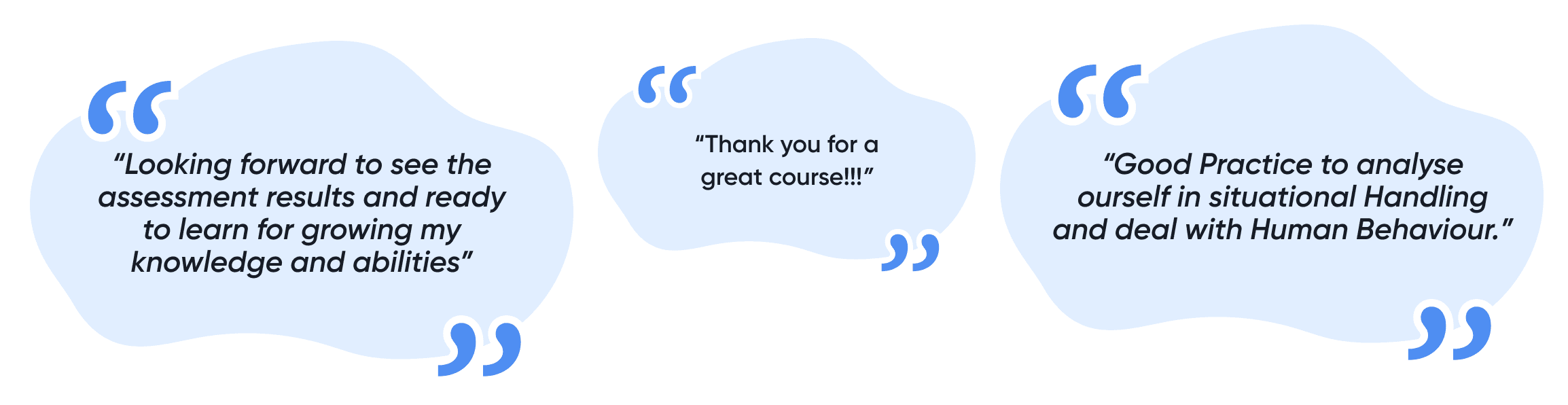
Participants highlighted the value of structured self-analysis, behavioural awareness, and clarity in identifying their development areas.
Over time, the initiative transformed how role readiness and development were managed across the organization.
Assessments identified measurable behavioural gaps
Individual Development Plans targeted specific competency areas
Skill scores quantified reinforcement effectiveness
Engagement analytics ensured accountability and sustained participation
Role readiness shifted from perception-based evaluation to measurable tracking
The program evolved into a diagnostic-led, gap-driven capability ecosystem rather than a generic training intervention.
Area | Before Eubrics | With Eubrics AI |
|---|---|---|
Role readiness visibility | Perception-based | 57% measurable role fitment tracking |
Skill evaluation | Manager-driven | 1,454 question-based analytics |
Learning alignment | Generic modules | Assessment-informed IDPs |
Participation tracking | Manual | Real-time dashboards |
Engagement | Passive | Gamified medal & XP system |
Development planning | Reactive | Structured, gap-based intervention |
By integrating structured assessments with Individual Development Plans, the organization established a scalable role-readiness framework that created a measurable bridge between behavioural diagnostics and capability development.
This initiative demonstrates how enterprises can transition from subjective evaluation models to data-backed development ecosystems that drive sustained engagement and measurable skill improvement across teams.