
A mid-sized maritime academic institution improved workplace readiness through structured digital learning, achieving 86.4% completion, 77.9% skill scores, and 4.5/5 ratings. The program enhanced communication, analytical thinking, and career preparedness with real-time skill tracking and practical learning modules.
Preparing students for workplace readiness through structured learning
A leading maritime academic institution introduced a structured learning initiative to strengthen workplace readiness among students. As students transitioned from academic environments to internships and early career roles, the institution recognized the need to equip them with practical workplace skills beyond traditional classroom learning.
While academic programs provided strong foundational knowledge, students required additional support in areas such as professional communication, analytical thinking, workplace etiquette, and decision-making. These skills were critical for success in real-world professional environments but were not consistently developed through conventional academic formats.
The institution needed a structured system that could bridge the gap between theoretical education and workplace expectations while providing measurable visibility into student skill development and engagement.
To address this, the organization introduced a structured digital learning initiative focused on building workplace intelligence, reinforcing practical skills, and enabling continuous tracking of learning outcomes.
The initiative focused on strengthening students’ workplace readiness while ensuring learning translated into real-world professional capability.
The organization aimed to:
Build strong professional communication and workplace etiquette skills
Strengthen analytical thinking and decision-making capability
Prepare students for internships and early career roles
Introduce measurable tracking of skill development and engagement
At the same time, the institution wanted to create a scalable framework that could consistently prepare students for industry expectations beyond academic learning.
To move beyond traditional academic instruction, the institution introduced a structured development journey focused on workplace intelligence and practical skill building.
Learning Built Around Real Workplace Expectations
Students progressed through curated learning modules covering professional communication, workplace relationships, interview preparation, and analytical thinking. The content reflected real workplace scenarios students would encounter during internships and early careers.
Applied Skill Assessments for Reinforcement
Participants reinforced learning through quizzes, case-based scenarios, and structured assessments that tested their understanding and ability to apply workplace concepts.
Career Readiness Through Practical Learning Modules
The program focused on preparing students for real-world environments by introducing practical scenarios around workplace dynamics, expectations, and decision-making.
Clear Visibility Through Real-Time Skill Analytics
Program stakeholders gained access to dashboards that tracked participation, engagement, and skill performance. This enabled better visibility into student progress and learning outcomes.
Together, these elements helped transform academic learning into a structured, measurable pathway for building workplace readiness.
Program Participation
The initiative saw strong engagement across students as they actively participated in structured learning modules.
Engagement remained steady as students progressed through different modules focused on workplace intelligence and career readiness.
Knowledge & Skill Progress
The results indicated a strong understanding of workplace concepts and the ability to apply learning across communication, analytical thinking, and professional scenarios.
Learner Experience
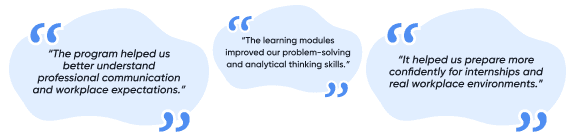
Students highlighted improvements in communication skills, problem-solving ability, and confidence in preparing for internships and professional environments.
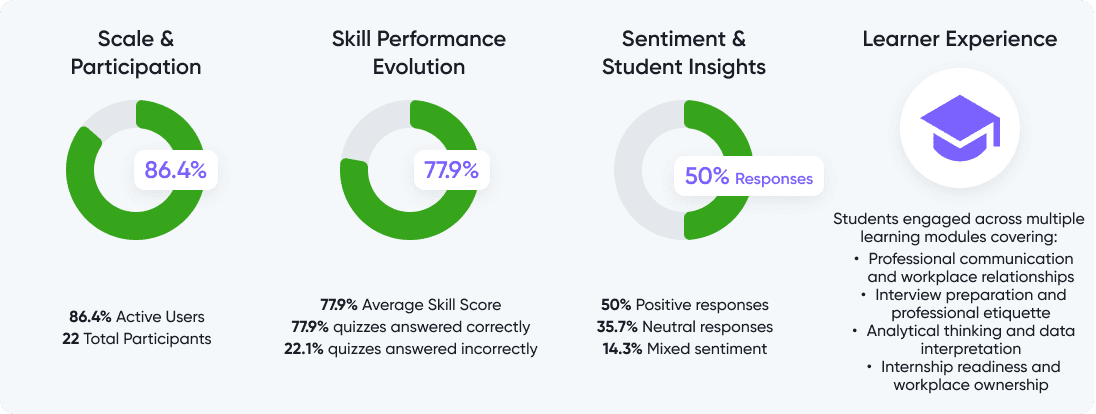
Over time, the program began influencing how students approached workplace situations and career preparation.
Students developed stronger professional communication and interpersonal skills
Analytical thinking and structured problem-solving improved across learning modules
Students felt better prepared for internships and real workplace environments
Faculty gained visibility into student engagement and skill progression
The initiative created a structured bridge between academic learning and professional readiness
Area | Before Eubrics | With Eubrics AI |
Workplace Skills Training | Primarily theoretical academic instruction | Structured workplace intelligence program |
Student Skill Visibility | Limited capability insights | Real-time skill diagnostics |
Student Engagement | Classroom-based participation | 86.4% active platform usage |
Career Readiness | General preparation | Focused employability skill development |
Learning Insights | Manual feedback | Data-driven learning analytics |
This initiative demonstrates how academic institutions can strengthen workplace readiness by introducing structured learning journeys supported by practical application and measurable skill tracking. By bridging the gap between classroom education and real-world expectations, the organization created a scalable framework for preparing students for internships, professional environments, and long-term career success.