Sales Effectiveness

Maxim Dsouza
Introduction
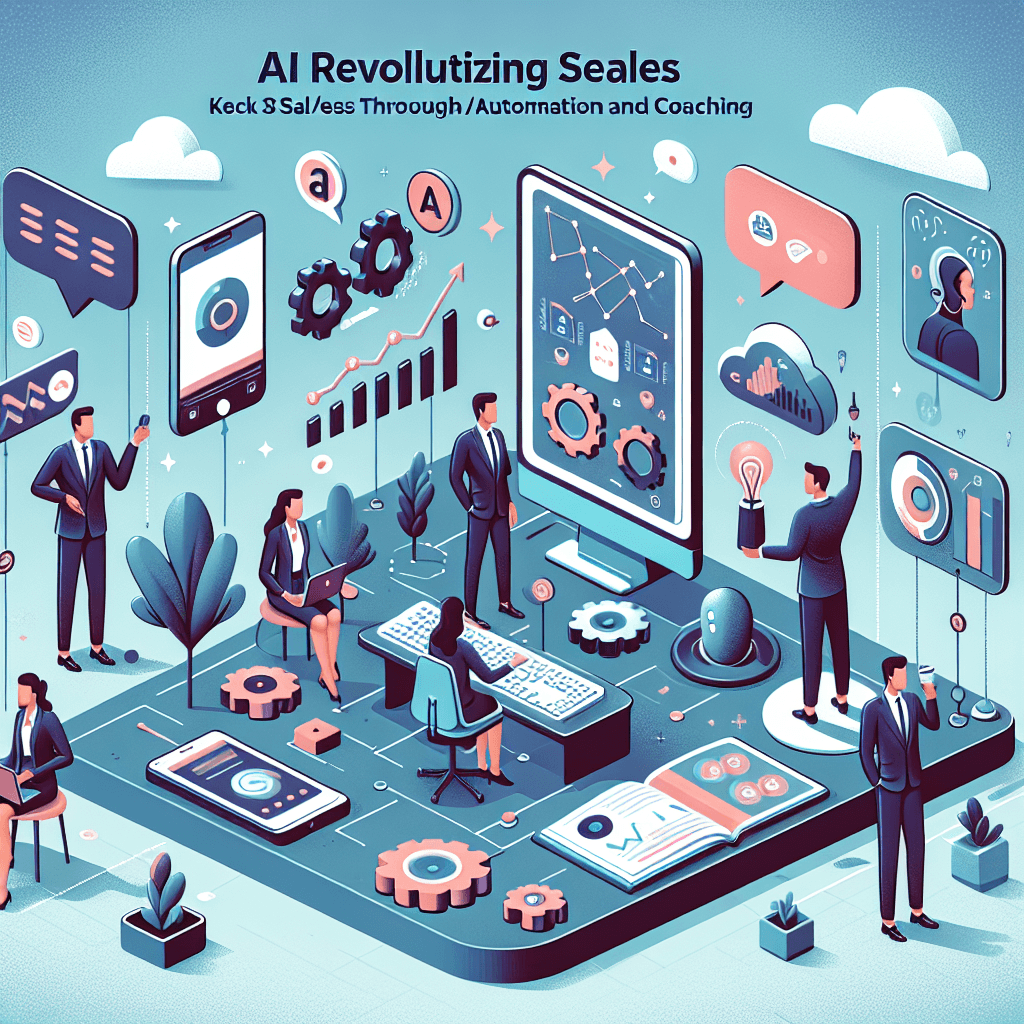
Sales leaders today face an increasingly complex challenge: how to empower their teams to exceed targets in a hyper-competitive, data-driven market. The rise of ai sales jobs is reshaping not only the tools salespeople use but how entire roles evolve. From automating mundane tasks to augmenting human decision-making, AI is transforming sales teams’ dynamics and performance.In my experience working with revenue teams, the integration of AI-driven solutions isn’t just a trend — it’s a fundamental shift in how sales organizations operate. Leaders who understand the AI impact on sales teams can unlock unprecedented productivity and coaching effectiveness. This article explores eight core sales roles being transformed by AI in 2026, explaining what’s changing, why it matters, and how to prepare your team for the future.
Sales Industry Context: AI’s Role in Closing Sales Coaching Gaps and Driving Revenue Performance
Sales organizations have long struggled with persistent coaching gaps and inconsistent enablement outcomes. According to Gartner, 60% of sales reps miss quota, often citing inadequate coaching and lack of real-time feedback as key barriers. Meanwhile, McKinsey research highlights that companies with advanced sales enablement practices grow revenue 2.3 times faster than their peers.
Enter AI: the catalyst redefining sales enablement and performance improvement. Modern AI-powered platforms can analyze rep behavior, generate personalized coaching insights, and simulate real-world sales scenarios. These tools help close coaching gaps by providing continuous, data-driven feedback beyond traditional quarterly reviews.
AI’s impact on sales jobs extends beyond coaching. It addresses fundamental revenue performance challenges by automating repetitive tasks such as lead qualification, data entry, and follow-up reminders. This evolution allows salespeople to focus more on strategic activities like relationship-building and complex negotiations.
The sales enablement function itself is evolving. Sales training software is becoming AI-enabled, offering adaptive learning paths tailored to individual rep skill gaps. Revenue operations teams leverage AI agents to optimize pipeline management and forecast accuracy.
Sales leaders must understand these shifts to keep pace with the future of sales roles. The blend of human intuition with AI-powered insights is unlocking new levels of productivity and growth.
Framework: How AI is Changing Sales Roles — Automate, Assist, and Elevate
To understand the AI impact on sales teams, it’s helpful to break down how AI transforms roles using a simple three-tier framework:
Automate: AI takes over repetitive, low-value tasks that consume time without adding strategic impact. Examples include data entry, lead scoring, and scheduling.
Assist: AI acts as a real-time assistant, providing reps with actionable insights, recommended next steps, and performance analytics during sales interactions.
Elevate: AI raises the role’s strategic value by enabling reps to focus on complex problem-solving, personalized customer engagement, and high-impact decision making.
This framework applies across sales roles, from inside sales reps to sales managers and enablement specialists. For example, AI automation frees Sales Development Representatives (SDRs) from manual outreach tasks, while AI assistance helps Account Executives (AEs) tailor pitches with predictive analytics.
Elevating roles means redefining expectations — sales managers now coach with AI-driven dashboards instead of gut feel alone, and enablement leaders deploy simulations powered by AI to scale roleplay training.
In my experience building technology platforms, organizations that embrace this framework see a measurable lift in sales effectiveness and rep satisfaction. It provides a clear roadmap to navigate AI adoption without fearing job displacement.
1. Sales Development Representative (SDR) — From Cold Calling to AI-Enhanced Lead Qualification
The SDR role has been one of the most impacted by AI in sales jobs. Traditionally, SDRs spend hours on cold calls, research, and outreach — tasks ripe for automation.
AI now automates lead scoring through predictive models that prioritize prospects with the highest conversion potential. AI agents can initiate personalized email sequences, freeing SDRs to engage only with warm leads. Natural language processing (NLP) tools analyze call recordings to provide instant feedback on tone, objection handling, and messaging effectiveness.
Rather than replacing SDRs, AI is augmenting their capabilities. SDRs are expected to become strategic prospectors who focus on relationship building and complex qualification, supported by AI insights.
A B2B SaaS startup I advised recently integrated AI lead scoring and saw a 30% increase in lead-to-opportunity conversion within six months. The SDRs credited AI tools for allowing more meaningful conversations rather than rote outreach.
2. Account Executive (AE) — AI as a Real-Time Sales Coach and Deal Strategist
Account Executives are central to closing deals, traditionally relying on experience and intuition to navigate complex sales cycles. AI is transforming the AE role by acting as a real-time coach embedded in the sales workflow.
During calls and meetings, AI-powered conversation analytics provide feedback on talk-to-listen ratios, objection responses, and competitive mentions. Predictive analytics help AEs prioritize deals with the highest closure probability and recommend personalized content or next-step actions.
AI also supports scenario planning by simulating potential objections or customer personas, enabling AEs to prepare more effectively. This shifts the role towards a more data-driven, consultative approach.
Enterprise sales teams deploying AI coaching software report a 25% increase in quota attainment and a significant reduction in ramp time for new AEs.
3. Sales Manager — Data-Driven Coaching and Performance Management
Sales managers have traditionally relied on subjective assessments and limited data to coach reps. AI transforms this role by delivering objective performance insights and prescriptive coaching recommendations at scale.
AI-driven dashboards aggregate data from CRM, call recordings, and email interactions to highlight skill gaps and behavioral patterns. Managers receive alerts when a rep shows signs of disengagement or slipping metrics. AI suggests tailored coaching content and roleplay scenarios, improving coaching effectiveness.
This shift elevates the manager’s role from “scorekeeper” to strategic coach — focusing on individual development plans backed by data.
In my experience working with sales leaders, those who integrate AI coaching platforms report higher team morale and sustained quota overachievement, as coaching becomes more personalized and timely.
4. Sales Enablement Specialist — Personalized Learning and Scalable Roleplay Simulations
Sales enablement teams historically struggle with delivering consistent training across dispersed teams. AI is revolutionizing enablement by creating personalized, adaptive learning experiences that target specific skill gaps.
AI-powered sales training software analyzes rep performance data to customize learning paths, making training relevant and efficient. Roleplay simulations powered by AI enable reps to practice conversations in realistic scenarios with instant feedback, replicating live sales environments at scale.
These tools increase enablement impact, reduce training time, and improve knowledge retention.
Startups scaling revenue find AI-driven enablement platforms essential for onboarding new hires quickly while maintaining quality.
5. Customer Success Manager (CSM) — Proactive Risk Identification and Upsell Opportunities
While traditionally focused on post-sale relationship management, CSMs are now benefiting from AI by gaining predictive insights into customer health and expansion potential.
AI models analyze usage data, sentiment analysis from communication, and contract terms to identify accounts at risk of churn or ripe for upsell. CSMs receive alerts and recommended conversation tactics to proactively engage customers.
This evolution transforms CSMs into revenue-generating roles with a stronger strategic focus.
6. Revenue Operations Analyst — Automated Data Integration and Forecast Optimization
Revenue operations analysts manage complex data from multiple sales systems to generate insights and forecasts. AI automates data cleansing, integration, and anomaly detection, vastly improving data accuracy.
AI-powered forecasting models incorporate external market signals and historical trends to provide more reliable predictions, enabling smarter resource allocation.
This automation frees analysts to focus on strategic analysis and cross-functional collaboration.
7. Sales Trainer — AI-Enhanced Content Creation and Impact Measurement
Sales trainers are evolving from content creators to facilitators of AI-driven learning ecosystems. AI tools generate customized training materials based on rep performance data and market changes.
Trainers can simulate diverse sales scenarios with AI roleplay platforms, providing realistic practice opportunities. AI analytics measure training effectiveness in real time, allowing continuous improvement.
This role now blends creativity with data science to maximize training ROI.
8. Sales Operations Manager — Workflow Automation and Strategic Enablement
Sales operations managers oversee process optimization and tool adoption. AI automates routine workflows like quote approvals, commission calculations, and territory assignments, increasing operational efficiency.
AI also provides strategic insights into process bottlenecks and tool utilization, helping managers drive continuous improvement.
This role is becoming more strategic and tech-centric, partnering closely with revenue leaders to scale AI-driven initiatives.
How This Platform Solves This: AI-Powered Sales Coaching and Roleplay Simulation
Our AI-powered sales coaching and roleplay platform bridges the gap between raw data and actionable insights. By integrating conversation analytics, performance simulation, and personalized coaching workflows, the platform helps sales teams embrace the future of sales roles with confidence.
Sales managers receive AI-driven coaching recommendations tailored to individual reps. Reps engage in realistic roleplay simulations that replicate real buyer scenarios, receiving instant feedback to improve skills. Sales enablement leaders can deploy adaptive training programs that address evolving skill gaps.
For revenue leaders looking to accelerate growth and maximize sales effectiveness, exploring an AI Sales Coaching Demo offers a practical glimpse into how AI transforms sales jobs in real-time.
Framework for Preparing Your Sales Team for AI Transformation
Adopting AI in sales roles requires a deliberate strategy. Here’s a step-by-step readiness framework:
Assess Current Capabilities: Benchmark your team’s skills, technology maturity, and data quality.
Identify High-Impact Roles: Prioritize roles where AI can automate routine tasks and elevate performance.
Select AI Solutions Aligned to Needs: Choose platforms that integrate with existing workflows and support coaching, training, and analytics.
Train and Enable Your Team: Provide change management and practical training on using AI tools effectively.
Monitor Adoption and Impact: Use data to track usage, performance improvements, and adjust coaching strategies.
Iterate and Scale: Continuously refine AI deployment based on feedback and evolving business goals.
This framework empowers revenue leaders to harness AI’s potential without disrupting core sales operations.
Explore a Sales Readiness Assessment to evaluate your organization’s AI adoption stage and build a roadmap for success.
Conclusion: The Future of AI Sales Jobs Is Here — Are You Ready?
The transformation of ai sales jobs is no longer a distant vision but a present reality reshaping how sales teams operate in 2026. From SDRs to sales managers and enablement specialists, AI is automating mundane tasks, assisting with real-time insights, and elevating the strategic value of sales roles.
Sales organizations that embrace AI-driven coaching, roleplay simulation, and data-powered enablement unlock measurable revenue growth and competitive advantage. The future belongs to revenue leaders who understand AI’s impact on sales teams and invest thoughtfully in technology and talent development.
As AI becomes an integral part of sales performance improvement, preparing your team with the right tools and frameworks is critical. The journey toward AI-enhanced sales effectiveness starts now — and the rewards are transformative.
For a hands-on experience of how AI can elevate your sales coaching and training programs, consider trying our Roleplay Simulation platform designed for modern revenue teams.
FAQs: AI Sales Jobs and the Future of Sales Roles
Q1: What are AI sales jobs, and how do they differ from traditional sales roles?
AI sales jobs integrate artificial intelligence tools into daily sales workflows, automating routine tasks and providing data-driven insights. Unlike traditional roles, these require skills in leveraging AI for coaching, analytics, and strategic selling.
Q2: How is AI impacting sales coaching and training?
AI enables personalized coaching by analyzing sales calls and performance data in real time. AI-driven sales training software offers adaptive learning paths and roleplay simulations that improve skill development and retention.
Q3: Will AI replace sales jobs or change them?
AI primarily changes sales jobs by automating tedious tasks and augmenting human decision-making, allowing salespeople to focus on higher-value activities like relationship-building and strategic selling.
Q4: What sales roles are most affected by AI?
Roles like SDRs, Account Executives, Sales Managers, and Enablement Specialists experience the most transformation due to AI automation, real-time assistance, and enhanced performance insights.
Q5: How can sales leaders prepare their teams for AI adoption?
Leaders should assess current capabilities, select aligned AI tools, provide comprehensive training, and monitor adoption using structured readiness frameworks to ensure smooth integration.
Q6: What metrics improve with AI in sales teams?
AI improves lead conversion rates, quota attainment, ramp time, coaching effectiveness, forecast accuracy, and customer retention by providing actionable insights and automating routine tasks.
Q7: Are there AI tools specific to sales training and roleplay?
Yes, AI-powered sales training software and roleplay simulators provide personalized learning experiences and realistic practice scenarios, enhancing skill development and engagement.
Q8: How does AI help sales managers coach their teams better?
AI delivers objective, data-driven insights into rep performance, flags coaching opportunities, and suggests tailored content, enabling managers to provide more effective, timely coaching.
Sources & References
Maxim Dsouza is the co-founder and CTO at Eubrics, specializing in AI productivity platforms for revenue teams. With 16+ years leading engineering in tech giants and startups, Maxim blends AI innovation with sales performance enablement.
```


Practice Makes Revenue: AI Roleplays for Rapid Ramp-Up
Explore AI Sales Roleplays
Reduce Ramp-Up time by
47%
and double your sales productivity
Co-founder & CTO
Maxim Dsouza is the Chief Technology Officer at Eubrics, where he drives technology strategy and leads a 15‑person engineering team. Eubrics is an AI productivity and performance platform that empowers organizations to boost efficiency, measure impact, and accelerate growth. With 16 years of experience in engineering leadership, AI/ML, systems architecture, team building, and project management, Maxim has built and scaled high‑performing technology organizations across startups and Fortune‑100. From 2010 to 2016, he co‑founded and served as CTO of InoVVorX—an IoT‑automation startup—where he led a 40‑person engineering team. Between 2016 and 2022, he was Engineering Head at Apple for Strategic Data Solutions, overseeing a cross‑functional group of approximately 80–100 engineers.